
ecommerce-shipping-costs

How to Lower Your Shopify Store Shipping Costs for International Growth

Shipping costs have become a key factor for e-commerce businesses. In 2018 alone, US companies spent $1.49 trillion on shipping, while mid-size companies overspend around 13% on shipping annually. This article shows how important it is for online shops, especially small-medium size companies (SMEs), to research and create a shipping strategy that suits their business needs.    

For SMEs, international shipping is sometimes a big challenge rather than an opportunity to grow their business. Before creating or changing any strategy to offer international shipping, companies should research and look into different shipping options to find a profitable way to grow their business internationally and deal with the hurdles of cross-border shipping.    

Here are five suggestions for businesses to save on shipping costs:  


Air, cargo, plane, shipping icon - Download on Iconfinder
Shipping rates

Shipping rates can be a make-or-break factor for online stores, especially SMEs; it is essential to look into different carriers’ options and cross-border solutions to find the most suitable for their business and customers.  

 Although the most common carriers like USPS, USP, and FedEx offer rates for small businesses, they may not be the best deal. Using third-party logistics brokers may offer better rates for smaller volumes could be a better option.  

BorderGuru, on the other hand, is part of Hermes, a global logistics champion base in Germany and offers competitive rates for cross-border shipping for online stores. BorderGuru is not a broker; it is a one-stop-shop solution focused on online stores that consolidate thousands of online orders from different stores and ship them to 200 countries worldwide. Getting to a specific volume to get a good deal is not a problem with BorderGuru.

 

Box, package, packaging, packing icon - Download on Iconfinder

Packing supplies  

Packing supplies are also essential to consider, and if not thoroughly planned, businesses can waste a lot of money on them. Nowadays, there are many hacks to save on this; here are some tips:    

  • Get an affordable shredder machine and recycle old boxes, paper bags, or paper sheets as a protective material for packages.  
  • Get packing supplies at wholesale (bubble-wrapped paper, mailers, and dunnage).  
  • Look for free packaging or discounts that some carriers offer. 
  •  Weight and dimensions of the package  

Weight and dimensions play an important role in the shipping cost. Being wise in choosing the right packaging size for the product can make a significant difference. For example, using mailer envelopes or poly bags for small non-fragile items like clothing can be a better cost-effective idea rather than using boxes. 

For businesses that sell heavy or bulky items, the most cost-effective option is to look into offering a flat rate. Since rates are calculated based on weight and dimensions, shipping certain things would be more expensive using a variable rate.   



Health Insurance Icon | IconBros
Insurance  
 

Another way to save is by cutting extra services. Depending on the product’s value, one of these additional services could be insurance. It is helpful to evaluate if shipping insurance is necessary based on the product’s value and the loss/damage rate that the business has experienced. If the rate of loss/damage is too low and the product’s value is not significantly high, then it is not worth spending money on insurance. 

Some cross-border solutions like BorderGuru have less than a 1% loss/damage rate, making it possible for businesses to add that percentage to their loss/damage concept in their budget and save by not paying extra fees on insurance. 

Suppose your business needs to have shipping insurance. In that case, third-party package insurers are usually cheaper than the options offered by shipping carriers, so please be sure to evaluate different options before making any big commitment. In the end, businesses should choose the most cost-effective option.  


Cost, delivery, ligistics, packing, service, shipping, transport icon - Download on Iconfinder

Educate customers about shipping costs and delivery times   

Displaying clear and concise information about shipping costs, delivery times, tariffs, and taxes will help businesses avoid cart abandonment, extra costs, and unsatisfied customers. Being transparent will build trust with customers, avoid misunderstandings about shipping fees and delivery times, and not miss repurchases. 

Borderguru, as a cross-border solution, can help businesses optimize the customer’s checkout experience by displaying clear information on the shipping fees, taxes, duties, and delivery time. Also, since customers pay all fees upfront, the delivery experience is smooth, as the package is already customs clear, increasing the chances of customer retention and repurchases.  


Shipping costs are inevitable, and as e-commerce continues to grow, these costs may also increase. Businesses need to do their research and optimize these costs without losing sight of their customers’ needs, so they can reinvest in other aspects of their business and remain competitive. 

Is your Shopify business looking for an efficient solution for shipping internationally? Then try BorderGuru and discover the endless possibilities for your business to grow! 

lane-bryant_super-stretch-skinny0-b50b09d25056b36_b50b0ade-5056-b365-ab705c19c71f6404

Plus-Size Fashion – A Plus-Size Market in Europe

The global plus-size market has gained momentum in the last couple of years, to the point that in 2019 it was valued at $480.9 Billion and is projected to reach $696.7 billion by 2027. This market is expected to show an incremental revenue opportunity of $215.8 billion from 2019 to 2027. 

The US has set the bar high when successfully serving this market. Although some European retailers offer plus-size clothing, there is still room for more brands in the market and US plus-size fashion retailers could be vital to fulfilling the growing demand.  

The average size of women in Europe is UK 14 – UK 16 (US 10 – US 12) in countries like Germany, the UK, Sweden, Denmark, and the Netherlands. Despite this being the standard, plus-size women have difficulties finding clothes that fit their style needs. Today, plus-size women look for fashionable and modern items easily accessible. US brands know this and have created trendy plus-size clothing by considering the consumers’ desires. 

Why is the plus-size fashion market continuing to grow?  

One of the main reasons for the continued growth of plus-size clothing is the body positivity movement.  

The body positivity movement started as a trend in 2012, and several industries, including fashion, became a part of it. Two brands that created powerful campaigns were Dove and Aerie and from that, more brands started paying attention and stepping into it.  

This movement first started in the 1960s in the US due to the challenges and health risks overweight women faced when fitting into the standardized body types. Nowadays, this movement aims to promote healthy habits and support and celebrate all body shapes.   

Promotional campaigns like Dove, Aerie, Vogue, Elle, and Glamour magazines, plus-size celebrities such as Adele, and models like Iskra, and Ashley Graham, have driven demand for the plus-size clothing market.  

European women are also getting into this movement, and many do not want to get thinner. They are confident in their bodies and do not necessarily want to change them. This means they are looking for brands that meet their size and style needs and encourage women to be themselves. 

US brands are recognized for mastering the plus-size market, giving them a competitive advantage in entering the European market and having higher chances of selling successfully.  

What is the best channel for US plus-size clothing brands to expand into Europe? 

In the last few years, e-commerce has become a primary sales channel, and after the pandemic, online fashion retailers have won significant market shares in Europe. The leading causes of this were sanitary regulations and lockdowns, creating the need to consume products online. 

According to the European Commission, the digital sales share increased from 62% in 2015 to 72% in 2020, showing that clothes, shoes, and accessories were the most popular purchased products in the European Union.  Now, after the pandemic started, the fashion segment is projected to show an annual growth rate (CAGR 2022-2025) of 14.50%, resulting in a projected market volume of US$365.9 billion by 2025. This indicates that online sales are in continued growth, as consumers are now more used to buying online due to convenience and a more extensive selection of products.

This growth has also made marketplaces the customer’s go-to place to buy apparel and the home for fashion brands to sell their products due to their already high brand awareness and recognition.  The top 6 apparel import markets in the EU are Germany, France, Spain, Italy, the Netherlands, and Poland. Germany is the largest importer of apparel products in the EU, with a total import value of €30.2 billion, making it an excellent opportunity for US plus-size fashion brands to enter the European market.   

Germany is the largest market within the EU; it is home to the largest and most popular fashion and lifestyle marketplaces, such as Otto, About You, Sheego and Zalando. They collectively have net sales of €18 billion, making it possible to help boost the sales of foreign brands in Europe.   

Otto

Founded in 1949, the OTTO Group is one of the largest eCommerce companies in the world, with online sales of more than €11 billion and over 3,400 sale partners. Otto.de is Germany`s most significant fashion and lifestyle marketplace. 

About you

Founded in 2014, it is Europe’s fastest-growing fashion e-tailer and part of the OTTO Group. It is considered a unicorn with a value of more than US$1 billion. Since 2020, About You has expanded to 23 countries in the EU with over 2,000 brands, including exclusive collaboration collections with designers.

Zalando

Established in 2008, Zalando is the most prominent fashion e-commerce marketplace in Europe. It’s available in 23 countries across Europe and sells over 4,500 different brands, with net sales of €8 billion. Zalando is a unique marketplace with a betting process, providing exclusivity and visibility to its brands. 

How can US plus-size clothing brands be part of this booming trend?  

We know that expanding into a new country can come with some complexities. Here is where we can provide help to businesses. 

We, as BorderGuru, have a solution called Marketplace Partners, which provides brands with tools to expand their business in the growing European marketplaces efficiently. Our solution offers brands localized services, such as tax and legal compliance, localized customer service, warehousing, logistics, and much more, eliminating all complexities of international growth.    

Plus-size clothing is a promising sector within the fashion industry, suggesting that there is still so much space and many opportunities for brands to expand and new ones to enter.  

Be a part of this ever-growing sector in Europe! Contact us now and get a free international growth assessment for your business today! 

abandoned-cart

Top 5 Actions You Need to Take to Reduce Shopping Cart Abandonment

Shopping cart abandonment is one of the most relevant issues online retailers face. Every year, $18 billion get stuck in abandoned carts. According to Baymard Institution, the average cart abandonment rate across all industries is 69.5%, meaning roughly 7 out of 10 shoppers won’t complete the transaction. These numbers indicate that cart abandonment is a top priority for online shops to work on and try to avoid since it is inevitable. 

Before getting into the reasons for Cart Abandonment and how you can reduce it, let’s start with the definition and how you can calculate this rate for your business. 

What is Shopping Cart Abandonment and how can you calculate your rate?  

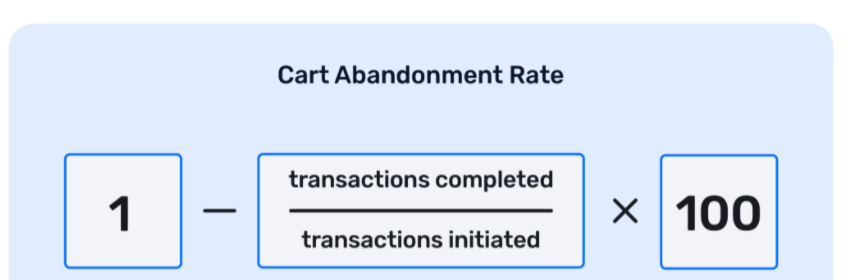
Online shopping cart abandonment is the act of a prospective customer adding items to a shopping cart but not completing the transaction. To evaluate the cart abandonment rate of your shop, you should follow this formula: 1- (total number of completed transactions/total number of carts filled) x 100.  


Before you make changes to your website, first assess the cart abandonment rate your shop is experiencing and then look for reasons and ways to improve it. 

What are the main reasons for Cart Abandonment?  

Users are complex, and cart abandonment cannot be entirely avoided. There will always be people who do not complete the transaction. However, most reasons for cart abandonment are the same for many shoppers, as they have similar buying habits and preferences. 

According to Baymard Institution, the main three reasons for cart abandonment are:
1) Extra costs are too high (shipping, tax, fees)
2) Asking to create an account for checkout
3)Delivery is too slow.


Most of these reasons have to do with a lack of research on their target market, an understanding of the user experience, and a failure to test their website’s performance or the usability of the shopping cart by users rather than just employees.  

How can you reduce cart abandonment?  

Here are the top 5 actions to reduce cart abandonment  

  1. Be transparent about all extra fees  

Be upfront with your customers about all the fees incurred, including shipping, taxes & duties. This would decrease the chances of cart abandonment and help you build trust that can later be converted into repurchases. 

Suppose your business encounters high shipping costs and unclear information on tax and duties. In that case, you should look for a cross-border solution that can provide you and your customers with a smooth shipping experience. BorderGuru is a suitable option for you, as we offer competitive shipping costs and calculate taxes & duties fees, displaying fee information clearly at checkout. This helps to be transparent and expedite delivery, as all items are custom cleared.    


     2. Offer different checkout options  

This is a crucial feature that can significantly impact whether a potential customer completes the transaction. Buyers do not like long checkout processes and the need to create an account to make a purchase. Asking a user to create an account before checkout can put potential buyers off and miss out on sales.  

To lower the chances of missing potential sales, offer different checkout options, for example, Member Checkout, Guest Checkout, and PayPal Checkout. This could give your business a better chance of attracting buyers to complete the transaction. The faster and easier the checkout process is for them, the lower the chances of cart abandonment. 


      3. Offer various payment options 

It is essential to be aware of and recognize the most common payment options used by your target visitors. Offering only the options, you are used to is not enough as several payment methods have become popular such as digital wallets and payment platforms such as Shop Pay and PayPal. 

The advice is to research the most commonly used payment methods by your target visitor or the countries you are selling to. For example, in Europe, paying with Apple Pay, Google Wallet, PayPal, or bank transfer is very common. Therefore, it is a matter of finding out what your visitors use for online payments and offering them to reduce cart abandonment.    


     4.  Optimize your website’s loading speed  

There’s nothing more frustrating for a user than a page taking too long to load. Site speed can often be overlooked, but it can significantly impact the user’s experience of your website. If your website takes more than two seconds to load, it increases the possibility of the shopper looking elsewhere. If your page takes four to eight seconds to load, you can lose most of your visitors. In current times, where users are used to everything being fast, they do not have the patience to wait for a website to load. 

 Three tips for speeding up your website 

  1.  Make sure your designs (images, videos, etc.) are optimized to avoid slowing down your website.
  2.  Check your site’s speed on both desktop and mobile devices. 
  3.  Establish an ongoing page load testing process to keep the loading speed minimum. 


     5- Communicate with shoppers who abandoned your website’s shopping cart  

Some shoppers need more time to decide on purchasing an item. Do not get discouraged when users abandon shopping carts. Since users are already interested in your products, it is time before they commit to buying. This means it is important to have a strategy to get their attention back to your website to get them to complete their transaction finally. 

There are two strategies to communicate with shoppers who left an uncompleted transaction: 

  • Personalized follow-up emails: This means sending them a reminder of the items they left behind and offering them a discount to get their attention and incentivize them to purchase the items. 54% of shoppers will return to the website to complete the transaction if the items left in the shopping cart have a discount. 
  • Show retargeting ads for the products left behind by shoppers. This will remind them of your products and your website. You can also run a special ad with a discount price for the item they are interested in. The aim is to attract them back to your website, increasing the chances of making a purchase.   


The most common reasons for cart abandonment are related to website and shopping cart user experience and extra costs like shipping and, taxes & duties. Brands should keep their customers’ preferences in mind to avoid these issues, it is essential to consider them when making decisions about your business and products to avoid losing potential sales. BorderGuru offers you a hassle-free international shipping service and a pleasant experience for your customers at checkout. We make international shipping as seamless as domestic shipping.


Contact Us Now to reduce your abandoned carts! 

border_sitio_interior_contacto_v2

Cross-Border eCommerce – The key to international growth

The Cross-Border Market 

What is Cross-Border trade? The simple definition is: selling your products online to international customers. According to the International Trade Organization, E-commerce is currently considered the most important channel and part of any business’s digital strategy.  

In the last few years, online shopping has grown and become more popular, with technology playing a key role in making it easier to sell and buy through this channel. Some key events in technology that directly impacted online shopping were launching smartphones, creating new payment methods like Google Wallet and Apple Pay, and the shopping features on social media platforms like Facebook Marketplace and Instagram Shop.  

Fast-forward to 2020, when the COVID-19 pandemic hit the world and governments-imposed lockdowns, the only way for retailers to stay in business was to sell online and companies that already had an online presence became more popular. E-commerce sales have grown steadily, as seen from the graph below. From 2019 pre-pandemic to 2021 post-pandemic, online sales have increased by US$1.57 trillion, and it seems like this trend will continue for the next few years.  

When it comes to selling internationally through E-commerce, the size of the pie for businesses can potentially become bigger as more visitors can convert into clients. The borders for selling and buying have become almost non-existent; more customers look for products from other countries. Online users worldwide have grown from 3.4 billion users in 2016 to 4.5 billion users in 2022; this increases the chances for businesses, including SMEs, to capture clients from other countries. 


Considering what we stated before, we created a list of benefits and critical factors to think about when selling through cross-border E-commerce.  

Cross-border E-commerce Benefits 

Stay competitive
The growth of E-commerce sales and internet users play a crucial role in the development of a business, so to stay competitive and current, companies must be ready and open to this channel.  

International expansion
Cross-border E-commerce selling across different countries has become easier as there is little to zero investment, making international expansion possible for SMEs. This sales channel offers the opportunity to sell and buy without the hassles of geographical boundaries, easing the reach of customers in other regions where there is demand.  

Increased business profit
As businesses get their products to a broader range of consumers, sales and demand are more likely to grow, resulting in higher revenue. Selling to other countries through E-commerce gives SMEs the chance to increase sales with no loss to bear and no limitations.  

Brand awareness 
Businesses can benefit from cross-border E-commerce in terms of brand awareness as it helps them reach the international market. It also opens the possibility for companies to customize their products to suit different market needs. By offering unique or customized products to the target market, the brand can gain higher brand awareness and recognition.  

Enhanced business sustainability
Since E-commerce platforms already have recognition worldwide, brands can better sustain themselves in the international market with more awareness and popularity when selling using Cross-border. It also allows companies to create a mark in the online world without higher costs and little investment. Online sales can be profitable for companies and worth sustaining.  


Cross-Border E-commerce Considerations  

Understand the local Market
It is essential that once businesses have an idea of the country or countries that demand their products, they do their research on the local market or markets. This is to be able to tailor the message and position that the product will have, for example, the local language, local currency, the local form of payments, and keeping an eye on cultural differences to avoid misunderstandings of your brand or product.   

Different payment methods
As mentioned in the previous point, it is essential to localize some aspects of your business. A strategy to do is to offer wider payment options. Nowadays, credit cards and PayPal are a must in many countries, but Apple Pay and direct bank transfers are commonly used in some countries or regions like Europe. Currently, businesses in Shopify can offer Apple Pay and even let customers pay with their Amazon accounts. It is particularly important as companies give consumers various ways to buy their products more conveniently.  

Logistics
The three crucial elements to consider in Cross-border E-commerce are delivery accuracy, time zones, and returns.  

Delivery accuracy and time zones
The key is to offer clear information and a reliable tracking system to build trust and get repurchases from buyers.
 

Returns
Research and understand the return rate and legislation of the countries that the business is selling toEnsureve a transparent process and policies to handle returns and communicate them clearly to customers.
 

Taxes and duties
When businesses decide to sell internationally, taxes and duties can get in their way if they do not research correctly and follow the necessary process. Companies need to have this information and check how it will be handled and communicated to customers. For example, it might be easier and more transparent for customers to see a price with tax included and to pay duties upfront along with shipping. This way, customers do not have to worry about further costs once their package arrives.  

Customer service 
When it comes to customer service, businesses need to pay careful attention to language and time zones. When businesses do not have enough resources to have staff that speak the local language of the country or countries they are selling to, we advise having a handy translator tool and patience to understand customers who might not speak English. If your demand is sufficient regarding time zones, it is best to consider hiring a customer organization system or a virtual assistant operating in the same time zone. These will help businesses avoid misunderstandings, be more efficient and keep customers happy.  


Conclusion

E-commerce has been growing in the last few years and is in continuous growth, which means that it is a channel that can potentially be highly profitable for businesses. Furthermore, as more people from all over the world use the internet for shopping, selling Cross-border can also allow companies to expand internationally with little investment and minimal risk.  

So why not look into what the world of cross-border E-commerce can do for your business? If you are interested in knowing how to get started and get your products to where your potential clients are, Contact US and take your business to the next level!