mexican holidays

Prepare Your E-commerce Store for Mexico’s Top Shopping 2022 Holidays

It’s that time of the year! Mark your calendar with the most important e-commerce holidays to increase your sales and customer base in Mexico.   

Due to its proximity to the US, it is a major trade partner, and consumers like to buy products from the US, which now is easier than ever with the growth of cross-border e-commerce.   

So, stay and prepare for the busiest shopping time of the year! … You can also check out our blog “6 Tips to Prepare Your E-commerce Store for Holiday Season,” to be fully prepared to succeed in these holidays.   


October  

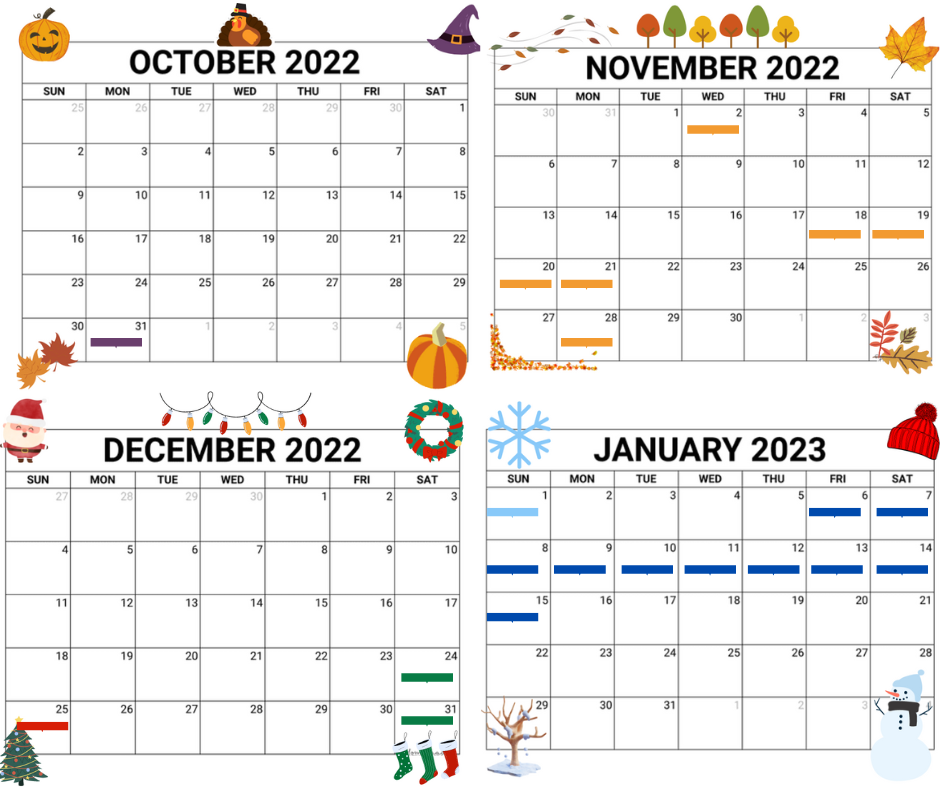
31st Halloween: This is celebrated the same as in the USA. There are Halloween parties and trick or treat. Not many national brands have deals during this holiday unless they sell Halloween costumes or decorations, but consumers are aware of US brands shipping to Mexico that do so. Be prepared to offer Halloween-themed bundles and discounts.   

November  

2nd Dia de Muertos (Day of the Dead): This day is mainly celebrated with family, and they make an altar for loved ones who have passed away, and some also visit their loved ones’ graves. For foreign brands, if they want to support this holiday, they can post content about it, for example “Feliz dia de los Muertos to all our Mexican customers.”  

18th to 21st Buen fin (Good Weekend): A weekend full of discounts from offline and online stores. This happens every year on the weekend before Thanksgiving (USA). Mexican shoppers expect good deals and discounts from local and international brands that ship to Mexico. You should be ready to have deals and market them through social media ads and Google, as they tend to browse the Internet to find out who has offers during this time.   

28th Cyber Monday: This holiday is the same as in the US. It is only for online shops, and Mexican consumers are aware of it and expect to find discounts from brands over the Internet.   

December 

24th Christmas Eve: In Mexico, this is the day when families gather for the big dinner and have the presents ready for Christmas Day. Some families exchange gifts on this day (like secret Santa). Take this into account for your marketing advertising and communication. 

25th Christmas Day: This day is when everything is close, children open their gifts, and people enjoy being with family.  

31st New Year`s Eve: This is celebrated with family or friends, like in the US. People get ready to ring the bells for the New Year. Some people make twelve wishes while eating twelve green grapes for the New Year. After Christmas, your shop should be ready to promote the New Year with campaigns on how your products contribute to goals, aspirations and new beginnings.   

January:  

1st New Year’s Day: A day to relax. Most people just stay at home or visit relatives to wish a happy New Year.   

6th Dia de los Reyes Magos (Wisemen’s Day): This day is celebrated by children leaving a letter or shoe to receive gifts, and then families have a special bread called “Rosca de Reyes.” For this holiday, the presents are for children, so they are the main focus for brands. However, for brands with a different target market, they can promote special discounts referring to “Dia de Reyes”, as currently Mexican consumers are used to this sales time.   

Rebajas de Invierno (January sales) 7th : January sales begin immediately after Dia de Reyes. Here is the time for brands to push sales by promoting winter items and new products that look towards starting a great new year.   


As the holidays approach, make sure you are ready in all areas of your business, from marketing, customer service to shipping, especially when it comes to international shipping, due to high customer expectations and logistical time constraints.   

As Borderguru, powered by Hermes Logistics, we can offer you our cross-border solution that can help you reach your customers in Mexico and around the world successfully. You will be able to provide them with an excellent checkout and shipping experience, with tax and duty calculations and low shipping costs at checkout.   

Make it easy for you and your customers to buy from your e-commerce brand these holidays! Contact us now.   

Holiday gifts central europe

2022 Holidays, gift giving and online sales in Germany, Netherlands and Poland

The most exciting and popular time of the year is around the corner. Holidays from Halloween to Christmas and New Year are the most profitable for businesses and are celebrated worldwide. For this reason, we share the most popular holidays in Germany, the Netherlands, and Poland. Mark these dates in your business calendar so you don’t miss the potential to increase your international sales.   

If you would also like to find out more tips to prepare your business for the holiday season, check out our blog, “6 Tips to Prepare Your E-commerce Store for Holiday Season.” 

Holidays in Germany, Netherlands, and Poland  

October 

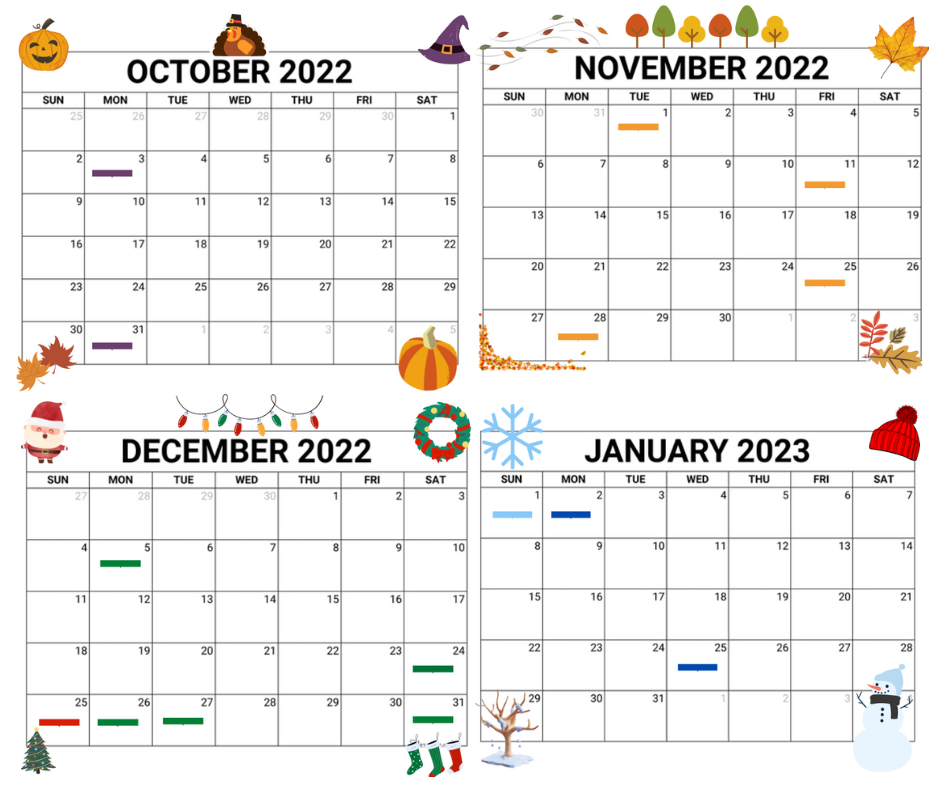
31st Halloween: Halloween is celebrated pretty much as in the US, with parties, festivals, pumpkin carving, and trick or treat. The difference is that it is not as big as in the US, but it is a time when brands can use it to promote their products with related Halloween themes and create new discount offers. 

November  

25th Black Friday: This US holiday, a particular time to buy products at discounted prices, has become popular in many places worldwide. Consumers in these European countries are used to these holidays. This is an excellent opportunity for US brands to take on these markets.   

28th Cyber Monday: Cyber Monday is a popular time to find discounts and bundles from many online stores. For new brands that want to expand into these countries, it is the perfect time to get on the wagon and create brand awareness to enter any of these markets and start selling. 

December   

24th Christmas Eve: This day is celebrated with a traditional dinner with the family and the opening of presents. In Germany, families have traditional meals, for example, potato salad with sausages. Some people celebrate this day by decorating their homes and having ugly sweater parties; others attend church. It is an excellent time for US brands to market bundle products and Christmas-themed items, and they should prepare their online store so that their customers can receive their orders on time.    

25th Christmas Day & 26th Second Christmas / St Stephen’s Day: These days are spent with family and friends, especially the ones you did not meet on Christmas Eve. They are more laid back to continue celebrating and relaxing.   

31st New Year’s Eve: As in other Western countries, this day is celebrated with parties accompanied by their loved ones. It is the start of celebrating the year’s end and the start of a new one. After Christmas, your shop should be ready to promote the New Year with campaigns on how your products contribute to goals, aspirations, and new beginnings.    

January  

1st New Year’s Day: A day to relax. Most people stay at home or visit relatives to wish them a happy New Year.    


In addition to the holidays mentioned, do not forget the following, which are specific to each country. And they are essential for brands to boost their sales this holiday season.   


Germany  

October 

17th September – 3rd October Oktoberfest: A massive holiday for the Germans, where Bavarian culture is celebrated. The main things they do are the big Munich festival, wearing traditional Bavarian clothes, drinking beer, and eating traditional foods such as sausages and pretzels. Foreign brands focus on finding a way to connect their product with tradition and raise brand awareness. This is for brands to stay current and not miss out on the potential this holiday can have on sales.   

3rd German Unity Day: It is a national day on which Germans celebrate the unification of Germany after the fall of the Berlin Wall. On this day, there are festivals with music and food, such as Independence Day in the US. In marketing, brands tend to create marketing storytelling campaigns around the subject to connect with consumers.   

November  

1st All Saints’ Day: This holiday used to be celebrated mainly regionally in the south and west, but today more parts of Germany celebrate it. This is the celebration of people who have died; families visit the graves of their loved ones with unique flowers and candles.    

January  

25th – 5th February Winter sales: This is a time for brands to prepare, as it is one of the biggest sales seasons for winter clothes, and to introduce new products related to the new year’s goals, such as travel goods, gym clothes, and contemporary fashion styles.   


Netherlands  

November 

11th Sint-Maarten: This traditional holiday looks like Halloween, as children walk door-to-door singing songs and get candy in return. They also make lanterns and bonfire celebrations and parades in the main cities. This holiday is not as commercial as Halloween. However, you could use it to raise brand awareness by posting on social media and creating product offers.   

December 

5th Sinterklaas: This is a Dutch holiday that focuses primarily on children. Sinterklaas is a white, older man with a long white beard and hair, a red miter, and a red cloak. He rides a white horse and has many helpers, like Santa Claus. This day is celebrated with children leaving a shoe in front of the fireplace the day before, and on the fifth, children sing songs and open their gifts in the evening. Adults organize a fun night full of crafts, presents, and poems.   

Brands should be aware that this is the time for children to receive their presents. It is therefore essential to have everything ready and advertise their products for this holiday, as it is an important time in the Netherlands and an excellent opportunity for brands to enter or grow their sales in this market.   

27th start of Winter Sales: Right after Christmas, winter sales begin; this is a great time to prepare for the New Year and get all the old stock for sale.   

January 

The whole month of Winter Sales: Winter sales continue, and a time to market products related to New Year’s goals and expectations, such as travel, health and fitness, and a new look.  


Poland  

November 

1st All Saints’ Day: This day to remember the relatives who died. On this day, Poles gather in cemeteries and take flowers and candles to their loved one’s graves. This is a holiday spent with family, remembering stories of the ones who have left this earth.   

11th Independence Day: This day is celebrated like the Fourth of July in the US, with concerts, parades, fireworks, and parties. During this time, most shops are closed, and it is time for friends and family to enjoy themselves together and celebrate their Polish heritage.   

January 

2nd January till 13th February Winter Sales: Winter sales in Poland last up to February. During this time, brands have discounts and special offers on winter items, and as soon as January ends, it is a great time to prepare for the launch of new products for the New Year.   


As the holidays get closer, it is the perfect time for your brand to expand its international footprint and have a higher chance of successfully entering. The holiday season after the pandemic is more special than ever, so it is even more profitable, as consumers look forward to buying unique gifts for their loved ones and themselves.   

Do you want to know how to expand successfully and without hurtles into Europe? We are the answer. BorderGuru, as part of the Otto Group, can offer you a service called Marketplace Partners Solution that provides your business with all the tools your brand needs to enter the most famous European marketplaces, such as Otto, Zalando, About You, Bol and others.    

Contact us now!   

holiday bes option for Canada

Canada Holidays 2022 – Get your Shopify store ready for cross-border

With Holidays around the corner, your e-commerce strategy needs to be ready. In our previous blog, “6 Tips to Prepare Your E-commerce Store for Holiday Season,” you will find additional tips to be 100% prepared for it. This time, we share with you the Special Holidays you need to mark on your calendar for your business to boost sales in Canada, and how to gain additional customers potentially.

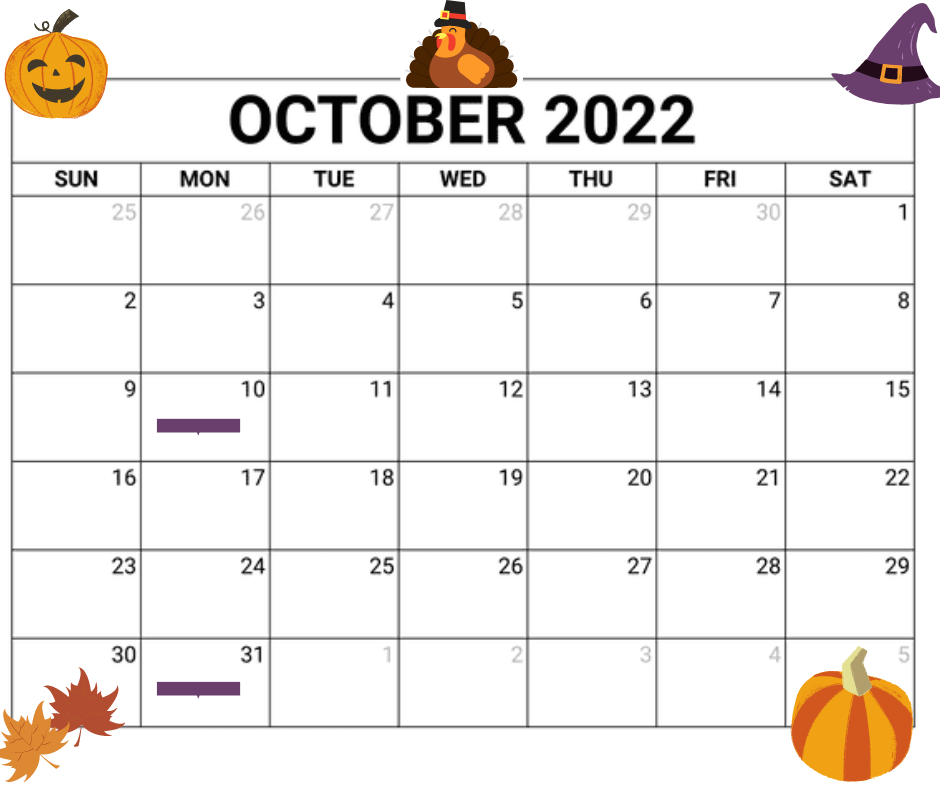
Thanksgiving 10th 

In Canada, Thanksgiving is celebrated on the second Monday of October, so this year lands on the 10th. Like the American Thanksgiving, this holiday is to spend time with their families. As an e-commerce brand, it is essential to be ready for this memorable holiday, as the weeks before are the busiest shopping days. Take advantage of this by marketing and promoting your products to be grateful to family and friends. 

Halloween 31st   

Similarly, as the celebration in the US, it is a day when children dress up in Halloween costumes and trick or treat around their neighborhood. Others have costume parties and pumpkin carving. People expect some deals on this holiday, mainly if you sell Halloween-related products. If you want to capitalize on this holiday, be prepared with discounts and bundle deals Halloween-themed, and you can also promote by doing content over social media.  


Black Friday 25th  

This holiday comes from the US every year on the last Friday of November, on November 25th, and has become popular in Canada. Shoppers in this country love the extreme price cuts that US brands are famous for during this time. As a US brand selling to Canada, be ready operational and promotional-wise to fulfill the incredible demand during this holiday.  

Sofa Sunday 27th  

This year’s Sofa Sunday is celebrated on November 27th. It has become a holiday due to the growing use of tablet devices. The idea is that after Thanksgiving (USA) and Black Friday, shoppers recover on Buy Nothing Day (Saturday) and then be ready on Sunday to go online and scroll websites to find online bargains. US brands that ship to Canada should be prepared to use it to grow sales and get new customers.  

Cyber Monday 28th  

This day is the first Monday after Thanksgiving (USA). This day is now used to promote online shopping, and is when people redeem gift vouchers and coupons and look for special discounts and pricing. As November has three special dates that promote shopping and special deals, it is essential not to miss out on any and research each audience to market what is needed according to the target audience.  


Green Monday 12th  

This holiday is important for online stores, as it is the second biggest selling time before Christmas after Cyber Monday. eBay created it in 2007 after it realized that from the second Monday of December, there are only ten days for orders to arrive on time for Christmas. Be prepared, as many are waiting for this day (last minute) to purchase the best deals for Christmas gifts.   

Super Saturday 24th  

This day can be seen as more profitable for offline stores, because Christmas is the next day. That does not mean online stores cannot play around with the concept and make good sales. Since customers are unlikely to receive gifts on time for Christmas Day, online brands can focus on people who have not received a gift for themselves and create a campaign with special discounts to promote self-confidence.   

Christmas 25th  

This day is for enjoying with family and give gifting. Most people do not pay attention to anything else, as it’s a special day to celebrate with your loved ones and spend quality time with them. This is not a shopping day, so relax and enjoy. 

Boxing Day 26 – 31 

Boxing day is on the 26th, but it has become a week of special discounts. Many businesses selling to Canadian shoppers offer special discounts and prices. This is the start of winter sales, and it is no longer about buying Christmas gifts, but buying for upcoming year occasions. Also, for things consumers could not buy before or during Christmas and waited for these deals.   

New Year’s Day 1st  

This holiday is for celebrating the New Year with your loved ones, whether with family or friends. After this day, you can promote the New Year for the next two weeks with marketing campaigns such as “New Year wardrobe,” “Gym clothes for your new goals,” and suitcases such as “New Year, new adventures.” It’s about aspirations and goals. Start the year with solid sales by knowing what your target market is interested in, and creating the need and want for them to have your products.  


Are you ready to take on the Canadian market? As important as marketing, offering an excellent international shipping experience is also essential; this is your lucky day! We are BorderGuru, a cross-border solution that can help convert your existing traffic into actual customers. We will make it easy for you to ship your products to Canada, so that you only focus on branding and selling your product. 


Contact us now! And start to boost your sales this holiday season!   


Falls Sie die verschiedenen verfügbaren Anbieter noch immer miteinander vergleichen und einfach nicht wissen, wo Sie sich ganz beruhigt registrieren können, empfehlen wir Ihnen einen genaueren Blick auf voxdeutschland.com, eine Seite, die durch hohe Sicherheitsstandards, eine große Auswahl an Spielautomaten und regelmäßige Aktionen für neue wie treue Spieler nachhaltig überzeugt.

Pokud právě teď porovnáváte jednotlivé dostupné herní weby a stále ještě nevíte, kde si bezpečně vytvořit svůj nový hráčský účet, doporučujeme určitě vyzkoušet zahraniční online casino, které vyniká vysokým stupněm zabezpečení, pestrou nabídkou her a pravidelnými promo akcemi pro nové i stávající hráče po celý rok.

Sustainable online selling and shipping - ecommerce

Sustainable eCommerce – Become a Sustainable E-commerce Brand

Recently, we have heard the word sustainability many times across all sectors. But what is it, and how small-medium e-commerce brands can positively contribute to sustainability? 

Let’s begin by defining “sustainability.” According to the United Nations, Sustainability is fulfilling the needs of current generations without compromising the needs of future generations, ensuring a balance between economic growth, environmental care and social well-being.   

In business terms, the meaning is to look at the products and services produced and consider their impact on the environment and society. 

In this post, we will explain the main pillars and practices to become a sustainable e-commerce brand and how you can positively impact your business, customer acquisition and customer retention.   

Consumers are now aware of the product’s impact on the environment. As e-commerce sales have increased, as seen in our previous blog, “Cross-Border eCommerce – The key to international growth,” the impact on the environment has become an essential topic for consumers.

In summary, this is the perfect time for small-medium e-commerce brands to start implementing sustainable practices that positively impact the environment while satisfying shoppers.   

What are the three pillars of sustainability? 

Environment: Focuses on biodiversity conservation without hurting economic and social progress, for example, safeguarding energy, reducing waste, reusing paper, and using sustainable transport. 

Economy: This refers to the ability of a company to manage its resources and responsibly generate profits in the long term. For example, create and promote awareness among consumers regarding responsible consumption.   

Society refers to ensuring proper working conditions and fair wages rather than just caring about volume and spending. It is about caring for employees and those in the supply chain and giving back to communities in need.  

Taking these pillars into account, here are four best practices you can implement to become a sustainable e-commerce brand.  

  • Supply chain  

It is essential to know where the raw materials for producing your products come from and how workers are treated. This is the first step to see if you need to make changes and how you can improve to contribute to sustainability.   

For example, if you are a fashion brand, you would check whether the fabrics used are recycled, if the cotton is organic, and about the travel time and energy used to produce. By auditing your supply chain, you can find out what you need to do or change to be more sustainable. 

  • Packaging  

As an e-commerce brand, the packaging is essential to deliver your products in good condition. Sometimes it is almost impossible not to use specific packaging to protect your products as much as possible. Still, there are alternatives that you can use to reduce the impact on the environment and be cost-effective without hurting quality.   

Some ideas:  

    • Use just enough packaging to protect the product, avoid oversized packaging 
    • Use packaging made of recycled materials   
    • Recycle old boxes, paper bags, or paper sheets by shedding them to use as a protective material for packaging 
    • Go paperless with invoices. 
    • Promote and raise awareness of the recycling of packaging materials by finding a new use or giving them back to you or recycling companies. 
  • Shipping  

Here are some ideas on how your company can implement sustainability in shipping your products. 

    • When possible, ship in bulk.   
    • Ask your customers to ensure their chosen address is the right one, and offer delivery alternatives to avoid additional trips and save resources. 
    • Use a cross-border solution such as BorderGuru, part of Hermes, a global logistics champion based in Germany, committed to reducing CO2 emissions and taking sustainability measures such as using electric vans, cargo bikes and renewable energy. 
    • Save money, time and transport resources by offering your customers the opportunity to pay taxes and duties at checkout and have customs-clear orders so their package is delivered to their chosen address without additional costs or trips. You can offer this with BorderGuru’s Shopify cross-border shipping app.   
  • Returns  

Returns for online shops are inevitable because there are various reasons a customer wants to return an item. But here’s what you can do to reduce returns: 

    • Provide clear information about your products, such as exact size information, high-quality photos and photos of different sizes, to avoid customers choosing the wrong size and reduce the likelihood of disappointment when they receive something different from what they expected. 
    • Implement policies to avoid customers ordering the same product in different sizes to reduce the probability of returning unwanted items. 
    • You could offer customers small discounts if they waive their return option. 

Once you have decided what to implement to contribute to sustainability, it is time to communicate this clearly and honestly with your customers. So, here are some tips to help you achieve this.   

  • The homepage  

In this section of your website, make sure that you share the sustainability practices of your brand with your customers in a friendly and exciting way for your target market, especially if you have certifications that increase the credibility of your brand’s sustainability statements and decisions.   

  • Product page   

Here you should share in detail information about your products’ source and production process and show their sustainable part. For example, if you are a clothing brand and use organic cotton, you should share it here.   

  • Checkout   

Be transparent about reducing carbon emissions from customer purchases, for example, by using a carrier like BorderGuru Hermes, which is committed to reducing its environmental impact. Another idea is to add a planet badge to your online store to show your commitment to shipping carbon neutrality to your customers.   

  • About Us page   

It would be best if you highlighted all your brand’s efforts to reduce the environmental impact. For example, if you have a donation or buyback program or program to encourage your customers to recycle non-used products. All this information is a great way to show how much you care about the environment and prioritize the life cycle of your products.   


This is the right time for your brand to become more sustainable and sell across borders! Take your US e-commerce brand to the next level and start selling to up to 200 countries using BorderGruru’s cross-border solution. Many potential customers from different countries are waiting for your brand to be available in their countries. Do not miss this opportunity and take advantage of this growing global demand!   

Contact us now and start selling internationally without complexities!
Australia_BorderGuru

Australia: Cross-border selling opportunity for US brands

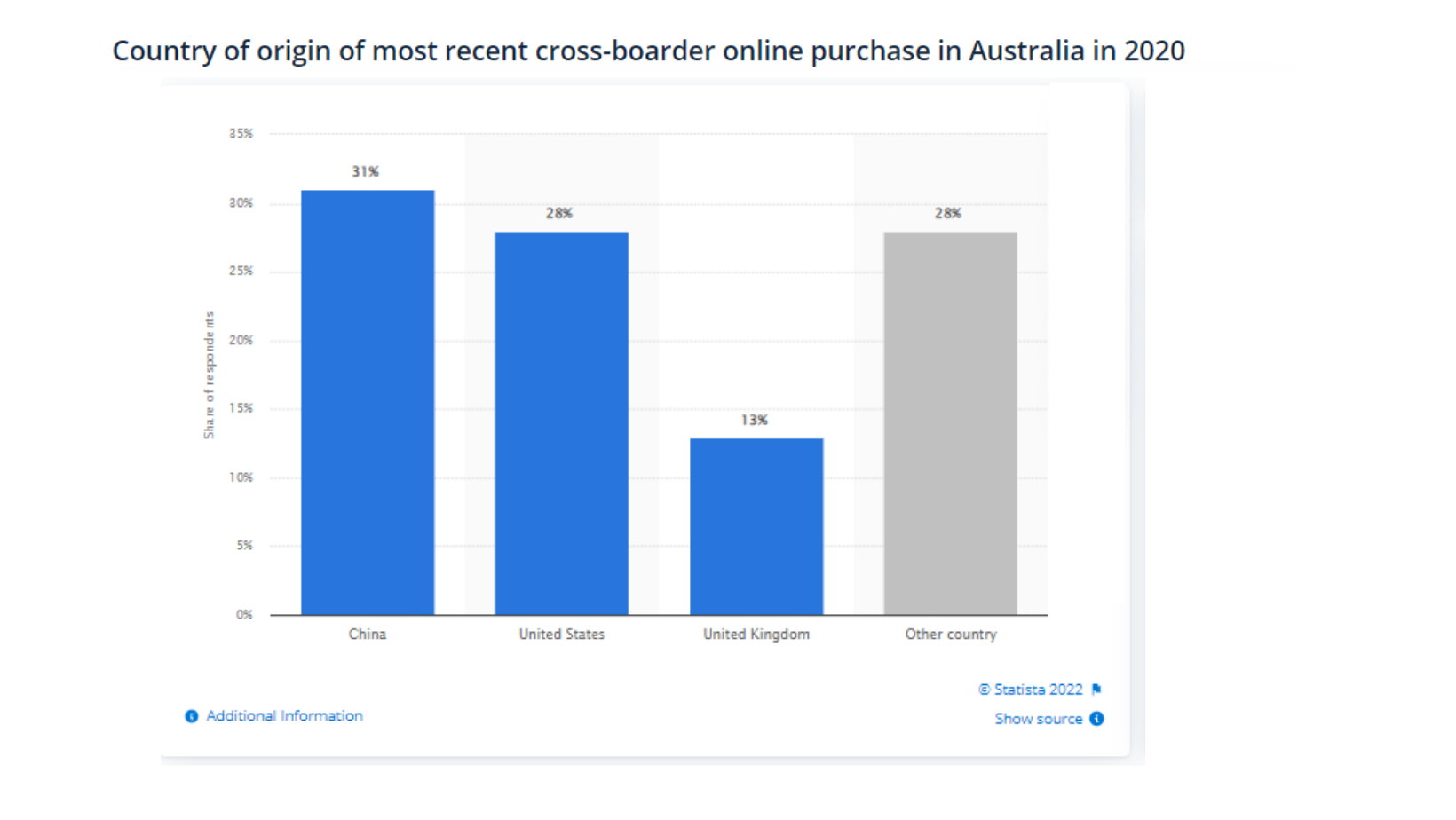
Australia is an important trade partner for the United States. Of the total imports, China is the most significant (29%), followed by the US (11%) and Japan (6.3%). The same applies to cross-border online sales, as shown in the following graph. The US is second with a share of 28%, putting it ahead of the UK and behind China. 

In 2021, it remained similar in terms of the top countries where Australians bought the most online, China with 30.1%, the USA with 22.5% and New Zealand with 4.7%. This means that the US continues to be a strong player in cross-border e-commerce in Australia, allowing US brands to enter the Australian market successfully.  

For this reason, we are discussing different market & economy overviews, digital overviews, e-commerce outlook, and how BorderGuru can help your brand expand into a country full of opportunities for your fashion Shopify store to increase international sales.  

Population & economy overview 

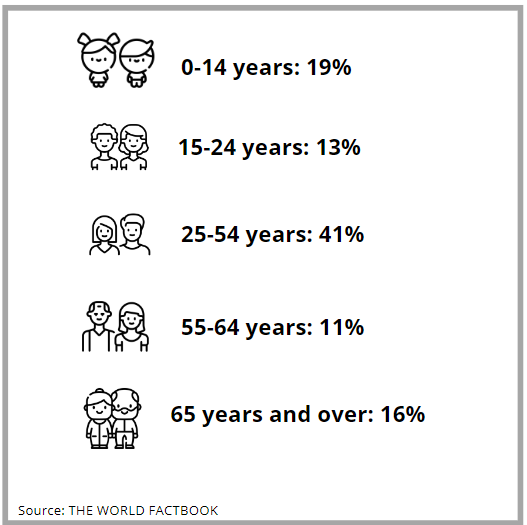
Australia has a population of 26.14 million. The most populous cities are Sydney, Melbourne, Brisbane and Perth. The median age is 37.5 years, and the largest age group in percentage is people between 25 and 54 years (41.15%), as can be seen in the image below: 


The official language is English, and the currency is the Australian dollar. The exchange rate is approx. 1 USD = 1.38 AUD.   

Regarding the economy, Australia ranks 13th among the largest economies in the world. With a GDP per capita of $51,885 and a Purchasing Power Parity (PPP) of $ 1.31 trillion. Australia’s economy has become stronger after the pandemic, and GDP is expected to grow by 6.6%  by the end of 2022. The International Monetary Fund (IMF) predicted that Australia would move up one place to be the 12th largest economy in 2023. 

Digital Overview 

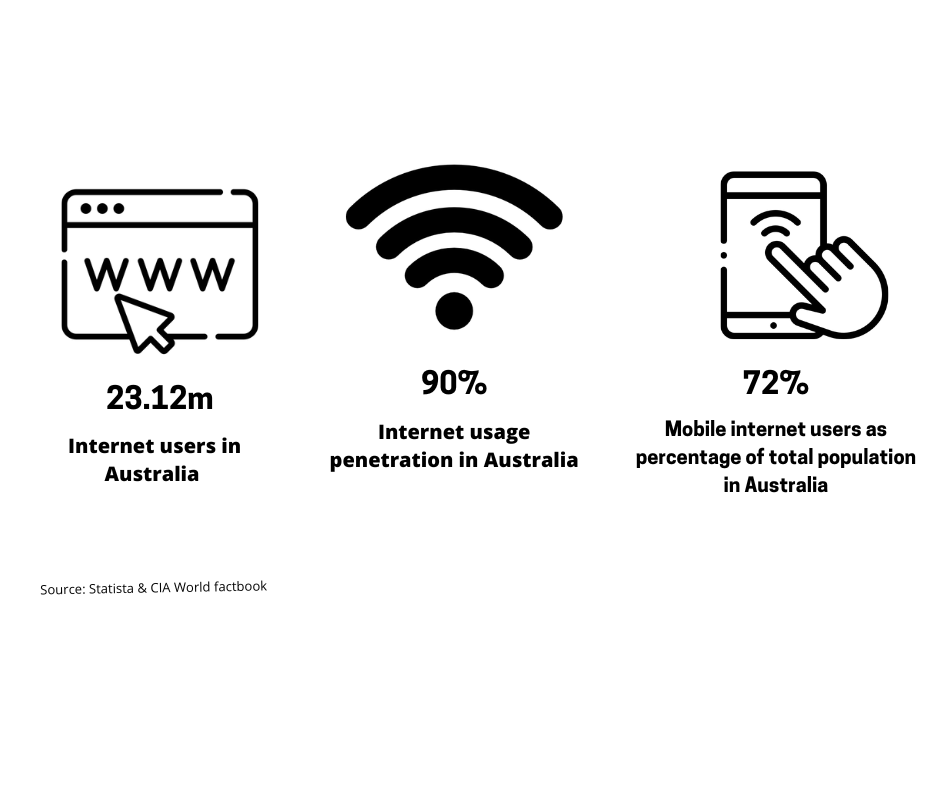
Australia is a very digital market like Canada, as our previous blog, “Canada: Cross-Border Selling Opportunity for US Brands,” shows. Australia has many Internet users. As seen in the image below, 90% of the population, just under 5% of Canada, has access to the Internet. It is also essential to be aware of the percentage of mobile Internet users, as it accounts for more than 50% of the population. Your website must provide a mobile-optimized experience, and the content must be suitable for mobile phones to further capitalize on this market.   

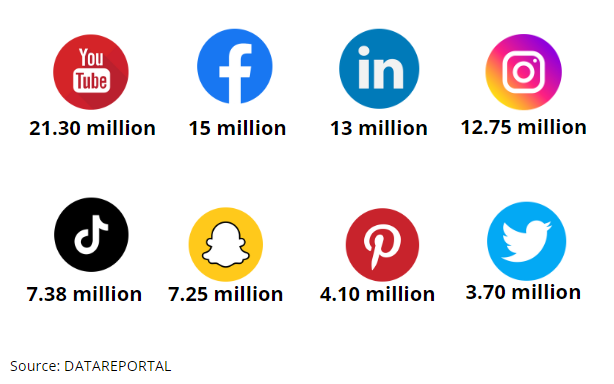
Regarding social media, there were 21.45 million users in January 2022, representing 82.7 percent of the total population; this is many users who can become potential customers for your brand. The following image shows the number of users per social network. With this information and knowing your specific target market, you can get an idea of where it is best to promote your brand to attract Australian consumers and increase your sales.   

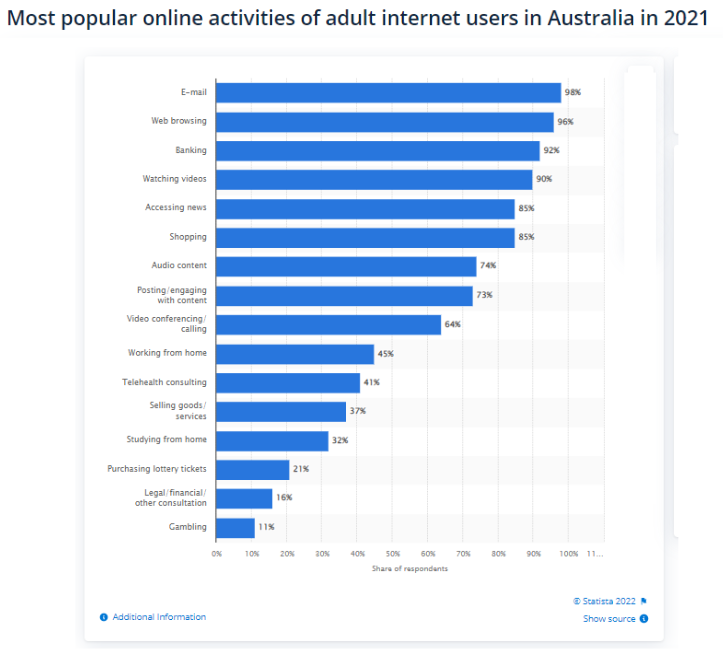
According to Statista, in 2021, the most popular online activities of adult Internet users in Australia were e-mail 98%, web browsing 96%, banking 92%, watching videos 90%, access to news 85% and online shopping 85%. This means that shopping is one of the top online activities as e-commerce sales continue to grow. As we will see next, “E-commerce Outlook.” 

E-commerce outlook 

As e-commerce sales are on the rise worldwide, Australia is in the same boat as online sales increased by 15% in 2021. The same year, Australia’s online sales totaled 31 billion US dollars, placing it ahead of Russia and Canada.   

According to Australia Post’s E-commerce Industry Report, online purchase frequency increased by 112% in 2021, from 1.6 million in 2019 to 3.4 million. Over 80% of Australian households made online purchases in the same year.   

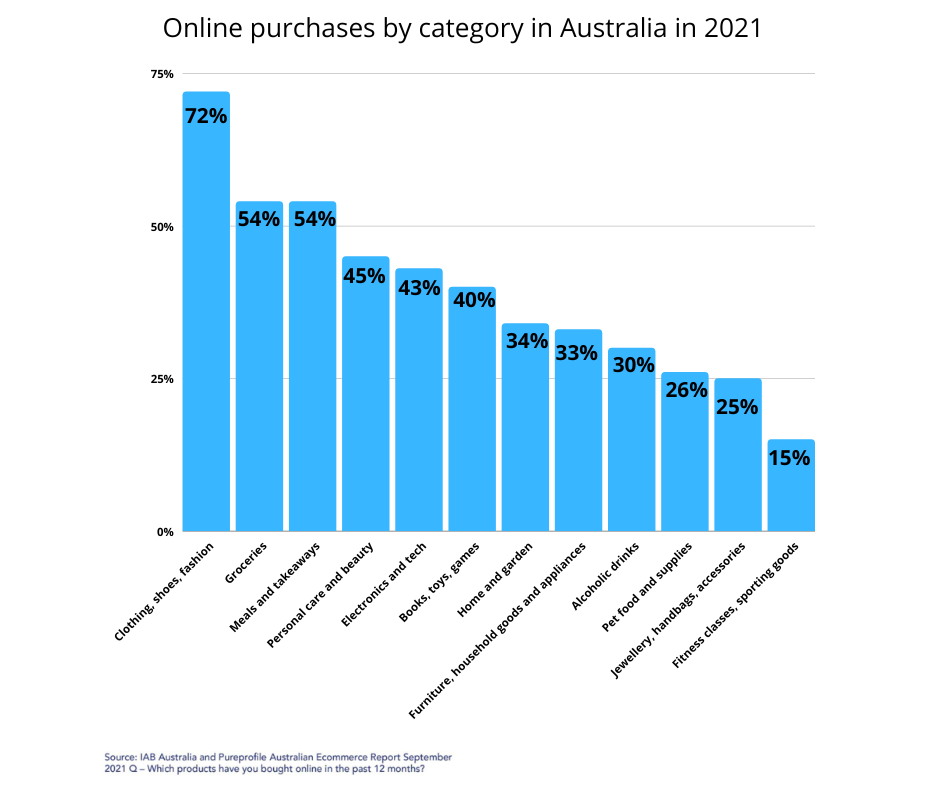
In 2021, the top 5 categories purchased through e-commerce (local and foreign brands) were fashion products (72%), groceries (54%), takeaways (54%), beauty (45%) and electronics (43%).   

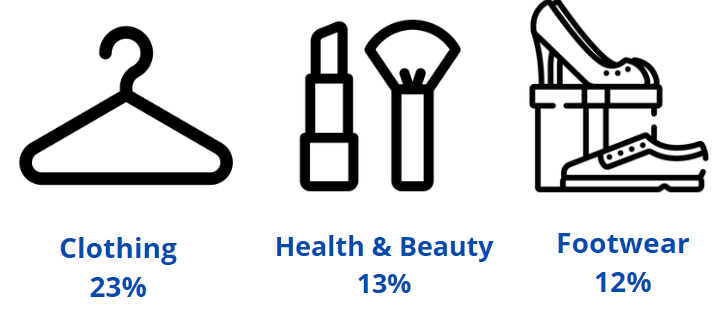
Not only are Australians buying more online vs offline, but they also buy more from foreign brands. In 2021, cross-border purchases increased more than domestic purchases, 5.32%, compared to 4.07%. And the top categories of cross-border e-commerce were: 


As seen at the beginning of this blog, the US is a strong player in cross-border e-commerce in Australia, after China is one of the countries where Australians buy the most products. This shows that more US brands in the trendy categories will successfully enter this market. 

Here are the top reasons Australians continue to buy online after the pandemic. This information comes from the Interactive Advertising Bureau Australia (IAB). 

  • Convenience – 76% 
  • Free delivery – 50% 
  • Lower prices – 45% 
  • Discounts – 37% 
  • More product options 33% 
  • Fast shipping – 26% 
  • Finding certain products/ brands – 25% 
  • Products only sold online – 25% 
  • Safety (avoid public places) – 20% 
  • Free returns – 13% 
  • Find new brands – 11% 
  • Reviews from other customers – 10% 

It is essential to be aware of these reasons, so you can provide the products and experience that the Australian market wants and expects from online stores. 

How can your brand expand to Australia without hurdles?  

BorderGuru can help your Shopify store to achieve a smooth and successful expansion into Australia by providing you with a full cross-border service, from legal compliance and competitive shipping costs to customs-clear orders. Process all international orders like any other domestic sale without investment or changes in your daily operations. Offer your customers the best online shopping and shipping experience. With BorderGuru, your customers will never have to deal with additional fees at delivery time. 

 Are you ready for the next step of your international expansion? Contact us now and start your global journey with us.   

Hâlâ internetteki mevcut farklı oyun platformlarını tek tek karşılaştırıyor ve nereye gönül rahatlığıyla kayıt olacağınıza bir türlü karar veremiyorsanız, size öncelikle Pashagaming sitesine yakından bakmanızı öneriyoruz; güvenliği, slot oyunlarının çeşitliliği ve yıl boyunca yeni ve mevcut oyunculara sunduğu sürekli promosyonlarla dikkat çeken bir adres.

holiday seasons main1.jpg

6 Tips to Prepare Your E-commerce Store for Holiday Season

It’s that time of the year! Can you believe it? Time to prepare for the Holiday Season.

As an e-commerce brand, preparing for one of the best sales times of the year is essential. The holiday season begins with Halloween, Black Friday, Cyber Monday, Christmas and the New Year. However, don’t forget other important holidays from other countries, such as Boxing Day or Wisemen Day, and after Christmas sales, such as January sales.

Since many dates are now considered essential holidays for online shops, it can be overwhelming, so brands need to start planning now. Avoid panicking and instead become shoppers’ go-to for gifts.

Consider these six tips for a successful holiday season. Trust us; they will help you stay calm and competitive, and even turn new and current customers into loyal ones.

1- Don’t undervalue the power of sales on other holidays around the world

As important as it is to consider US holidays, which are also celebrated in other countries, such as Christmas and New Year. Other holidays could be regarded as necessary, depending on where your customers are.

For example, suppose your customers are in Mexico or Spain. In that case, it is important to consider Wisemen Day (Dia de Reyes), as it is a memorable holiday where children receive surprise gifts (similar to Santa’s gifts), which your business can capitalize on. Similarly, if your customers are in the UK, Boxing Day is a date to mark as special to increase your revenue.

So don’t forget to research to maximize sales during the holiday season!

2- Prepare for incoming traffic

As the holiday season approaches, consumers start looking for gifts, which translates into increased sales and inventory needs. So, to keep your customers happy, consider the following:

  • Check inventory:

Consider your most sold and popular products and plan to have a higher number of items in stock than you usually do. Collaborate with your marketing and demand planning team to have as much information as possible to help you forecast and make informed decisions rather than guessing.

  • E-commerce fulfillment: 

As sales increase, so does the fulfillment of orders. This means you should be prepared to have sufficient resources, personnel and packaging materials to complete all sales. Remember, it’s essential to keep customers happy. Try to avoid mistakes by planning as much as possible.

Also, do not forget about the after-sale experience. Since many products are bought as gifts, prepared for exchanges and returns in January, the customer experience is the key to re-purchases. Better to be prepared than to lose customers.

  • Website reliability: 

It is common for people to buy at the last minute, and systems can become saturated. To avoid an unpleasant experience for your customers, test your site and ensure your site’s infrastructure is ready for high demand. Remember that page load speed matters for revenue, avoiding cart abandonment.

3- Enhance Customer Experience

This is one of the most important aspects to consider, as it can turn into a purchase or unfinished transaction. From the moment your home page is displayed on the customer’s device, it is the first impression they get from your brand. Make sure your homepage shows what your customers are looking for. This means your bestsellers, discounts, search bar and menu so they can easily navigate through your site. If your site is complex to navigate, you risk users will not find what they need and will look elsewhere.

4- Ensure maximum transparency in the shipping experience

For online brands, the shipping experience is essential, and during the holidays, you can encounter problems that affect the ability to deliver orders on time, which can upset customers. Since delays cannot be avoided this season, you should be ready to communicate this clearly to customers.

Customers also appreciate tracking their orders and getting notifications to be informed. They take this aspect as an excellent customer service experience. As BorderGuru, we can help you provide an excellent shipping experience, as we offer whole track and trace transparency and competitive shipping prices.

You can also try to avoid additional delays with our service, as we calculate all taxes and duties in real-time at checkout and provide your customers with customs-cleared orders. So, you and your customers do not have to worry about extra delays and fees.

5- Optimize your online shop’s marketing

At this time of the year, the more you can advertise your products, the better, as consumers actively seek items to gift and wear at holiday parties. Ultimately, if you do not showcase your products, people will never know about them.

Some of the things you can do to optimize your marketing efforts are:

  • Find out where your target market spends the most online
  • Take the time to prepare the design and copy of your ads
  • Use your social media pages to post organic content
  • Collaborate with influencers who resonate with your target audience

6- Special offers

Special offers are a must during the holiday season, so please do not forget to consider this. As these are special days for many, consumers will appreciate the nice touches on this. This can differentiate you from competitors.

To optimize the results of these special offers, you can create a feeling of urgency by offering them for a limited period, and you can change them as you see fit.

Some ideas for special offers are:

  • Discounted prices
  • Buy one, get one free or at a discounted price
  • Purchase a certain amount, and you get a free gift
  • Gift-themed stickers adding your brand name
  • Include a personalized message depending on the holiday (Halloween, Christmas)
  • Free branded goodies as a thank you

This year’s holiday season is expected to be particularly special for businesses and consumers, as they want to celebrate as closely as before the pandemic. This is the time for your online shop to shine, despite the logistical challenges associated with a busy sales season.

Remember to plan this properly, so that you can achieve positive results. Also, to stay in customers’ minds, so they come back to you and even recommend your brand to others.

BorderGuru can help you successfully reach all your customers around the world. Offer your customers an easy and convenient shipping experience with our cross-border solution. We calculate all taxes and duties in real time and handle them for you. We provide your customers with customs-cleared orders and competitive shipping prices. This gives them less worrying and more time to enjoy their holidays with their special people.

Let us help you succeed in this holiday season! Contact us now and be fully ready to bring happiness to your customers.

About You1.jpg

ABOUT YOU- The Most Inspiring Online Fashion Shop in Europe

Are you a US fashion brand looking to grow internationally? This is your lucky day. 

Stay and learn more about the fastest growing fashion marketplace in Europe; AboutYou.

AboutYou was founded in Hamburg, Germany, in 2014. It is a member of the Otto Group a global retail and services group with a clear focus on innovation and digital transformation. AboutYou as a fashion technology company with a solid and savvy team, the aim is to digitalize the classic shopping stroll by creating an inspiring, personalized and unique shopping experience on the smartphone.


The vision was to create the first online destination where brands could showcase their products inspiringly, so that consumers could find and be inspired by relevant products that fit their style, regardless of the screen size, in addition to offering the most personalized fashion online shop.

AboutYou has achieved this goal of transforming how people buy fashion online, and has built a multi-award-winning app. Customers can find thousands of inspirational and versatile designs from over 3,500 brands on its website and the app.

Imagine having the opportunity to sell your designs not only in Germany, but also in other 25 European countries?

As the biggest market in the EU, Germany offers consumers keen to shop online and from foreign brands due to benefits like a wider range of products available, convenience, and better service. Also, marketplaces and smartphones are the most popular ways to shop online. Germany is a great market to start your expansion journey into Europe. Learn more about it in our blog “Germany – The Biggest Online Market in Europe“

With AboutYou, all this becomes possible, as it is active in Germany and other 25 European markets. With 45 million unique active users per month, more than 26 million app installs and more than 1,000 influencer collaborations, your brand will have all the exposure and tools to succeed in Europe.


AboutYou is the ideal marketplace for US fashion brands. Its target market is the young generation willing to be part of not only its current success of it, but also of what the future might bring. This fashion marketplace stays current with the trends, needs and wants of consumers, and works further into the future.


Everything this marketplace does, they do it with passion, innovation and excellence, always thinking ahead and with an open mind to learn and improve for their customers. It is the same effort they put into brands so that they can succeed and work towards the same goal that focuses on their customers, who are supported in expressing themselves through unique fashion. The AboutYou team is also consistent with personalization, inspiration and mobile shopping.

With the experts in fashion e-commerce, you can be sure that your brand and collection designs are in great hands. As already mentioned, your brand will also have the highest market exposure. AboutYou works with many of the most successful European influencers and models awarded each year in the ABOUTYOU AWARDS EUROPE, which means your brand has the exposure needed to shine.


And what would an innovative brand be without being environmentally and socially responsible? 

AboutYou strongly supports sustainability, and some of the actions that have taken are:

  • One of the first companies to receive verification for the Sustainable Apparel Coalition’s Brand and Retail Module
  • The use of eco-friendly boxes and poly mailers 80% recycling material and fewer prints.
  • Increase transparency through new shop features, which label sustainable products and show all criteria and certificates
  • Increase the number of sustainable brands and products in their portfolio
  • Continuation of the AboutYou Vintage Wardrobe – A space where festival and event visitors can rent secondhand clothing for free and learn more about used garments and the concept of circularity

If you are a US fashion brand committed to sustainability and want to make changes to impact the environment positively, you are definitely in the right place! As AboutYou is a marketplace acting in the present for a better future and constantly looking for improvements. They want more sustainable fashion brands to be part of their sustainable project and serve the high demand that these fashion products currently have, as Europeans have become more environmentally aware. They are supporting and loving brands that are transparent about their actions and bring a positive impact to the table.

You can learn more about sustainable fashion in Europe and the German online fashion market in our previous blogs “Sustainable Fashion Industry in Europe” 


This is the best time for your brand to expand its international footprint in the European market.

How can you be part of AboutYou?   

All you need to do is contact us now. BorderGuru, as a member of the Otto Group, has the Marketplace Partners Solution, which allows US fashion brands to be part of AboutYou and other exclusive marketplaces to expand into the European market. We provide brands with tools to expand into these marketplaces efficiently, allowing them to succeed.

Our solution provides businesses with localized services, tax and legal compliance, customer service, warehousing, and logistics that eliminate all complexities of international growth.

Don’t wait anymore and grow your brand successfully in the European market!

couple-furnishing-apartment-together

Homeware and Furniture Market in Europe

We have seen how sales of e-commerce have increased in recent years, especially during and after the pandemic. Growth between 2019 and 2021 was significant. It went from $3.3 trillion to $4.9 trillion, and is expected to rise to $7.3 trillion in 2025. This shows that e-commerce is here to stay and is changing not only the way we do business, but also the purchasing behavior of consumers.   

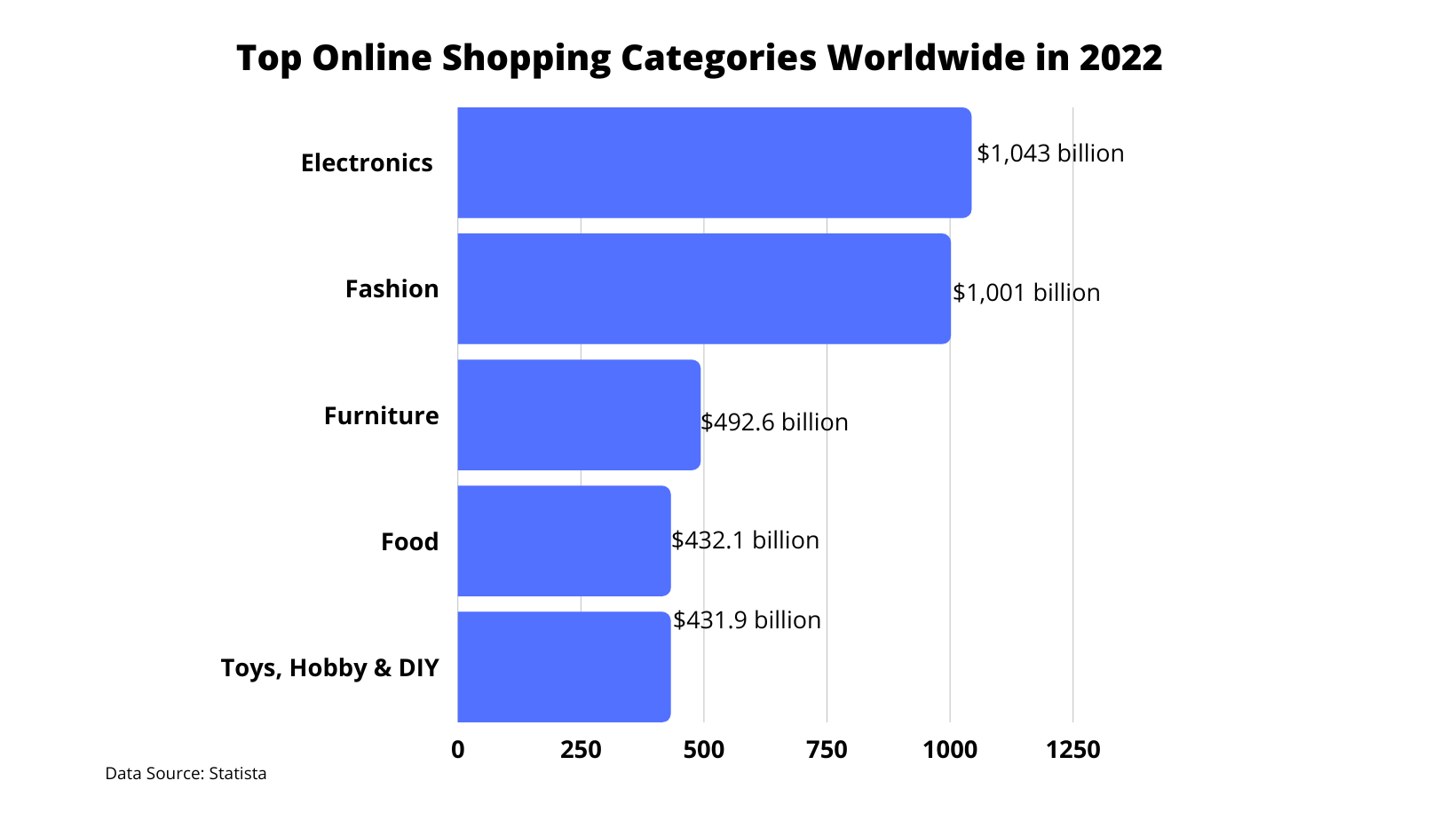
If we look at the top online selling categories worldwide in 2022, furniture is third with a forecast sales of $492.6 billion, as seen in the graph below. This is important, as furniture and homeware have been an offline market for many years. Until recently, consumers have been open to the possibility of purchasing these products online. This is because companies in this segment use new technologies to improve the experience of consumers and try to adapt it to the experience of buying in person.  

According to Technavio, by 2025, the homeware & furniture category will grow by $52.95 billion and progress at a CAGR of 9%. Since this market in the online world is still new and unexplored, there is an amazing opportunity for brands to monetize this channel.   

Where are the opportunities for US homeware & furniture brands to grow internationally?   

Let’s begin by mentioning the key consumers of online homeware and furniture products, starting with the US and followed by the UK, China, Germany, Canada and Japan. Europe will, however, have a higher importance in the growth of this segment. From 2020 to 2025, this market will account for 42% of global sales growth.   

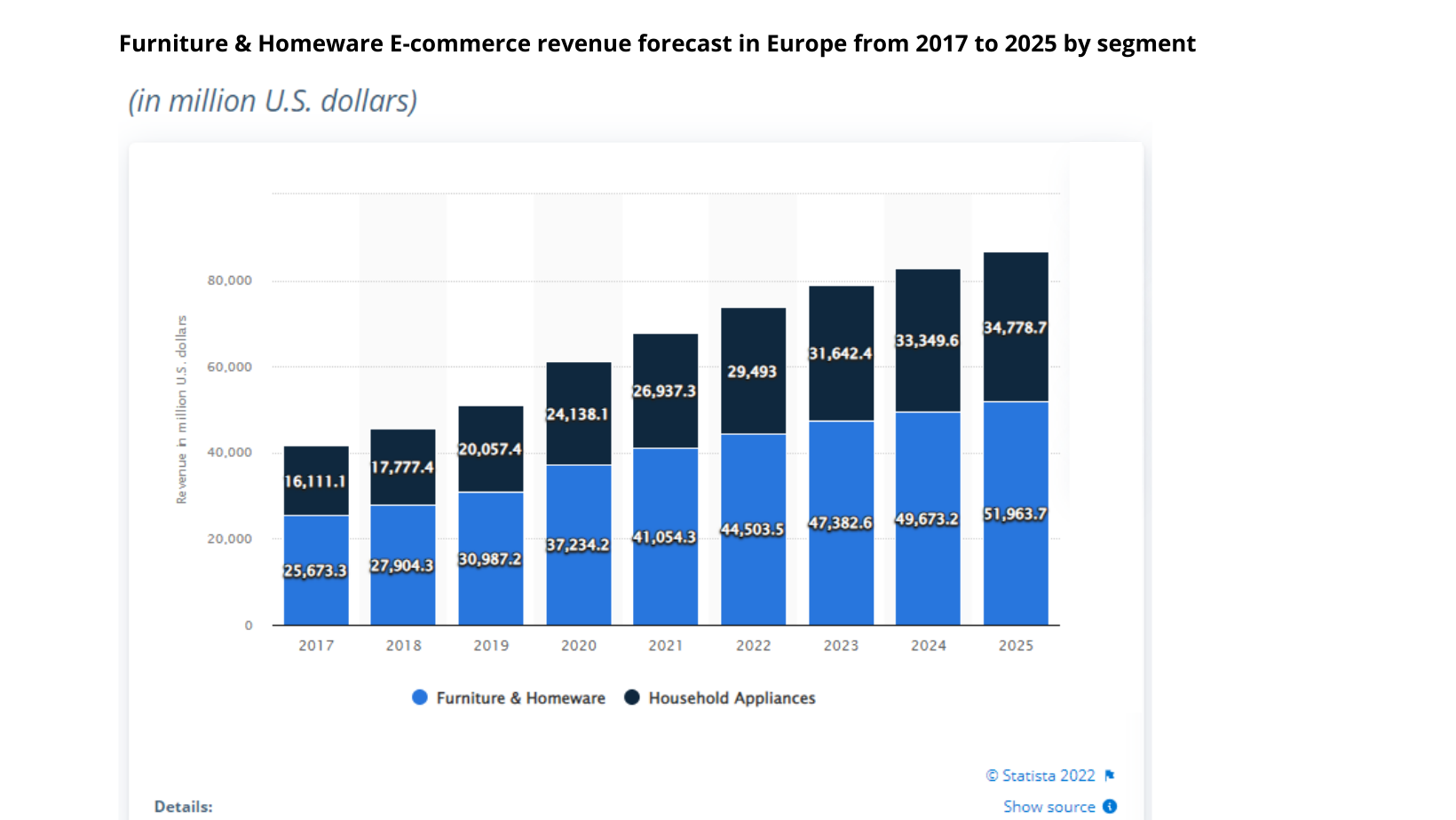
As shown in the graph below, Europe’s online homeware and furniture segment has grown by an average of $3,634.6 million each year from 2020 to 2022. It is expected to grow at an average rate of $2,584.825 million annually from 2023 to 2025. It seems a little less than in the previous period, but that’s because the boom was during the pandemic when people were confined to stay indoors. However, this also helped to develop the online sales of this segment. 


Within the European Union, Germany is one of the largest e-commerce markets. According to Statista, Germany was second in e-commerce revenue in 2021 with $105 billion, as France was above $120 billion. Of the total e-commerce sales in Germany, $15 billion came from homeware and furniture, which accounts for 14%. Like global e-commerce sales, the homeware and furniture segment is not the largest, so the market is not saturated. New brands have more opportunities to penetrate the German online market and be part of this growth.    

Main drivers for the increase in online home appliances and furniture in Germany 

In Germany, consumers used to buy from offline stores due to the touch-and-feel experience, but this has changed and homeware online sales have grown due to technological advances and the use of mobile phones. 

Online homeware and furniture retailers such as Otto and Ikea have implemented the following to be more attractive to consumers and reduce the reluctance to buy online.    

  • 3D product visualizations   
  • Augmented reality apps    
  • Omnichannel shopping (combine stationary showrooms & online distribution channels)

These implementations have helped customers to have a better experience when shopping online for furniture and homeware. As a result, this segment has gained traction in Germany.   

How is it best for US homeware and furniture brands to expand into Germany?  

As previously mentioned, Germany’s homeware and online furniture market has only been significantly growing recently and is not yet saturated. This has become the best channel for new brands to capitalize on in the German market.   

The ways for US online homeware and furniture brands to expand into Germany are to have their online store or join a local champion marketplace. The first option is pricey, logistically and operationally too complex, especially for SMEs that may need more extensive infrastructure to handle all international orders.

The second option, selling their products in a marketplace, is more viable, as it already has the infrastructure and resources needed to sell products in Germany. There is also awareness and respect of local customers; it is less complicated and less money is required to invest.    

Here we present the best online stores for homeware and furniture:

The top three are Otto, Amazon and Wayfair, focusing only on marketplaces. Otto is Germany’s leading online marketplace in this category, with net sales of 1.5 billion euros, and is also among the top players in growth.   

Otto marketplace is part of the OTTO Group, founded in 1949. Now with over 3,400 sale partners in the fashion, lifestyle, homeware & furniture industry and more than 11 billion euros in sales, it’s the biggest marketplace in Germany.   

Given Otto’s presence and market penetration in Germany, it can allow US homeware and furniture brands to enter the German market, which is the largest within the EU, and be part of its success. Otto has a strong presence and the infrastructure and resources to support brands entering and growing in the German market. Otto is the best choice for logistics, marketing, and customer service.   

How can your brand be part of the Otto marketplace?  

We know that expanding into a new country can come with several complexities, even if it is selling in a marketplace. Here is where we can provide help to your businesses.  

The most suitable way for your brand to sell in this exclusive marketplace is to be part of our Marketplace Partners Solution. We provide brands with tools to expand efficiently into this marketplace, allowing them to succeed. Our solution provides businesses with localized services, such as tax and legal compliance, customer service, warehousing, logistics, and more. We eliminate all the complexities associated with international growth.     

Let us help your brand expand successfully into Europe. Contact us now and open the door to endless opportunities! 

world-crossborder-ecommerce

Top Countries for US Fashion Brands to Expand Internationally

Our previous blog, “Cross-Border eCommerce – The Key to International Growth,” mentions that e-commerce is continuously growing. According to Statista, online sales in 2021 were $4.9 trillion and are expected to rise to $7.3 trillion.   

The cross-border e-commerce market value in 2019 was about $579 billion and is expected to reach $2.25 trillion by 2026. Cross-border e-commerce involves buying and selling products in online stores across international borders.   

The following map shows the countries with the most significant percentage of shoppers buying from international online stores.

As we can see in the image, these are some countries where US fashion brands can expand internationally. Taking this premise into account, the five most important countries with the highest percentage of cross-border shoppers are; Brazil at 86%, Australia at 85%, Canada at 83%, France at 79% and Germany at 74%.    

In 2020, the countries that purchased the most from US brands through e-commerce were: Canada at 51%, Mexico at 50%, South Korea at 47% and India at 28%.   

The main reasons for consumers to purchase through cross-border e-commerce are:   

  • Lower prices  
  • Brands not available in their home countries 
  • Unique and more expansive product options 

Where does Fashion stand in the e-commerce market?   

The global Fashion C-commerce Market was valued at nearly 700 billion US dollars in 2021. In 2022, it is expected to be one of the three most important categories of global e-commerce sales, with a revenue forecast of $1 trillion. This category has grown continuously and become more popular in online sales. Global fashion e-commerce is expected to reach more than $1.2 trillion by 2025.   

The International Post Corporation’s online survey, conducted in 2021 in 40 countries with 33,179 participants, found that the top categories in cross-border e-commerce were clothing, footwear and apparel, with 34% of respondents.   

As can be seen, fashion products have a high demand worldwide, leaving plenty of room for brands interested in fulfilling the needs and wishes of consumers in other countries to do so successfully.    

Which countries have a higher potential for US fashion brands to expand?  

At this point, you might ask yourself what the best countries for your US fashion brand are to expand and increase your international sales. Here you will find a list of the countries with the highest online fashion sales.   

Looking at the graph below at the revenue of fashion retail e-commerce by country, we can get an idea of the top 10 countries where the fashion category in e-commerce has a higher penetration and thus higher revenue.

1. China  

  • Internet penetration in 2020: 70%  
  • E-commerce sales in 2021: $2.78 trillion 
  • Fashion e-commerce sales forecast 2022: $312.2 billion 
  • Percentage of cross-border shoppers: 65% 

 2. The UK 

  • Internet penetration in 2020: 95% 
  • E-commerce sales in 2021: $1.69 billion 
  • Fashion e-commerce sales forecast 2022: $60.56 billion 
  • Percentage of cross-border shoppers: 66% 

 3. Japan  

  • Internet penetration in 2020: 90% 
  • E-commerce sales in 2021: $144 billion 
  • Fashion e-commerce sales forecast 2022: $54.39 billion 
  • Percentage of cross-border shoppers: 36% 

4. Germany  

  • Internet penetration in 2020: 90% 
  • E-commerce sales in 2021: $101.5 billion 
  • Fashion e-commerce sales forecast 2022: $38.47 billion 
  • Percentage of cross-border shoppers: 74% 

5. South Korea  

  • Internet penetration in 2020: 97% 
  • E-commerce sales in 2021: $120.56 billion 
  • Fashion e-commerce sales forecast 2022: 37.18 billion 
  • Percentage of cross-border shoppers: 41% 

6. France 

  • Internet penetration in 2020: 85%
  • E-commerce sales in 2021: $80 billion
  • Fashion e-commerce sales forecast 2022: 32.96 billion
  • Percentage of cross-border shoppers: 79% 

7. India 

  • Internet penetration in 2020: 43% 
  • E-commerce sales in 2021: $67.5 billion 
  • Fashion e-commerce sales forecast 2022: 19.69 billion 
  • Percentage of cross-border shoppers: 56% 

8. Italy  

  • Internet penetration in 2020: 70% 
  • E-commerce sales in 2021: $26 billion 
  • Fashion e-commerce sales forecast 2022: $19.43 billion 
  • Percentage of cross-border shoppers: 67% 

9. Canada  

  • Internet penetration in 2020: 97% 
  • E-commerce sales in 2021: $44 billion 
  • Fashion e-commerce sales forecast 2022: $16.53 billion 
  • Percentage of cross-border shoppers: 83% 

10. Australia 

  • Internet penetration in 2020: 90% 
  • E-commerce sales in 2021: $31 billion 
  • Fashion e-commerce sales forecast 2022: $11.12 billion 
  • Percentage of cross-border shoppers: 83% 

These countries could be an excellent choice for US fashion brands to expand their international footprint. As shown, they not only have the highest percentage of consumers willing to buy from foreign brands through e-commerce but also the highest fashion e-commerce sales. These offer US brands high opportunities to penetrate the international market successfully.   

What do you need to consider before expanding into a new country?  

Marketing elements  

  • Identify your ideal international customer: Your brand needs to create a target persona that means your ideal international customer. In this way, you can find the most effective way to present and sell your products and have a higher chance of success in the market or markets you want to expand. 
  • Connect with influencers: This marketing tactic has become popular in recent years, allowing brands to become more natural and build trust. It is also a way to connect deeper with consumers. Finding influencers with followers like your ideal customer could give you a higher chance of starting on the right foot and attracting their attention. 
  • Engage with your Audience: Research popular social media networks within your target audience and try different engagement activities to find out what gives you positive results—for example, answering messages on time, giveaways and polls. This will help you to increase brand awareness, trust and sales. 
  • Retarget visitors: It is a good marketing practice to have campaigns to retarget visitors who have left products on the shopping cart or have products on their favorite list. For example, show ads or send e-mails with discounts on the products they were interested in. Retargeting helps increase turnover and generate a great return on investment (ROI).   

 Logistics and payment  

  • Payment options: Be aware of your target market’s most common payment options. For example, paying with Apple Pay, Google Wallet, or bank transfer is very common in Europe. Therefore, it is a matter of finding out what your visitors use for online payments and offering them.   
  • Customer service: Customer satisfaction is the key to happiness, loyalty and returning customers. Barriers to language, culture and time zones can be challenging to provide an excellent buying experience. However, allocating staff to support clients in other countries helps businesses avoid misunderstandings and be more efficient.   

 Delivery experience: 

  • Shipping cost: One of the concerns of shoppers buying from international brands is the high shipping costs. So, what you can do as a brand is finding the most cost-effective solution to offer your customers. This will help your customers continue their checkout and improve their shopping and shipping experience. With BorderGuru, you can offer the most competitive shipping costs and a smooth checkout experience.   
  •  Delivery time: This is also a concern and the best thing to do is to be transparent with your customers about delivery times and situations where deliveries can be delayed. Next, you need a solution that provides your customers with reliable shipping updates until they receive their package. BorderGuru offers end-to-end track and trace that allows your customers to feel safe, as they will know every shipment stage until it gets delivered. 
  • Return policy: Research and understand the return rate and legislation of the country or countries the business is selling to. Make sure to have a straightforward process and policies to handle returns and communicate them to customers. 
  • Customs, Taxes and duties: It is vital for companies to have information on customs, taxes, and duties and check how they will be handled and communicated to customers. For example, it might be easier and more transparent for customers to see a price with tax and pay duties upfront along with shipping. This way, customers do not have to worry about further costs once their package arrives, as it will be customs cleared.   

If your brand is ready to take the next step towards international expansion, consider us your global partner. BorderGuru will provide full support by offering you and your customers the best shipping experience, from competitive shipping costs to calculating taxes and duties at checkout to custom-made orders so that your customers do not have to worry about surprises at delivery.   

With BorderGuru, you have the opportunity to ship to up to 200 countries without any hurdles.  

Contact us now and discover the endless possibilities the international market offers! 

sustainable fashion- trash

Sustainable Fashion Industry in Europe

In recent years, sustainable fashion has become an important topic for brands, the government, and society. The fashion industry dramatically impacts the environment, with its carbon footprint accounting for more than 10% of global greenhouse gas emissions. As climate change issues become more visible, current and new, brands in this sector are encouraged to be more transparent with their fabrics, production, disposal, and working conditions.    

Regarding global revenue, Eco-fashion is now a $6.35 billion industry while growing from $1 billion ten years ago. It is also expected to increase to $8.25 billion in 2023. As for the number of sustainable clothing items in 2018 grew by 508%, from 58,144 SKUs in 2016 to 353,817 SKUs in 2018. The world’s leading markets, measured by sold SKUs, are the US, Germany, the UK, France, China, and Italy.   

This growth has to do with younger generations being more aware of fashion brands’ environment and social impact. According to a survey conducted in the UK and Germany by Mckinsey & Company, during the COVID-19 pandemic, consumers began to change their consumption behavior. The main findings were that 57% of 2,000 respondents had made significant lifestyle changes to reduce their environmental impact, and 60% had recycled and purchased products in environmentally friendly packaging. Other vital measures included buying more durable items, keeping items that already have for longer, and repairing items to prolong use. 

As can be seen, there is already a demand for sustainable fashion products, and companies have a job to do in this regard. However, to continue to raise awareness of sustainable practices and take action on this issue, we must first understand what sustainable fashion is, its issues, and its importance.   

Several definitions cover the same elements. Here we present the following three:  

According to the Journal of Fashion Marketing and Management, Sustainable fashion consists of local sourcing and production, transparency across the supply chain, traceability of work processes and raw materials, environmentally friendly raw materials, safe working conditions, and fair wages.   

Sustainability in the context of fashion refers to the environmental impact of the production (production, processing, and production of raw materials), the wear and care of (use), and the disposal of clothing (end of use).  

According to several fashion experts, the most accepted definition: Sustainable fashion is an all-encompassing term that includes products, processes, activities, and actors (government, brands, consumers) aiming to achieve a carbon-neutral fashion industry based on equality, social justice, animal welfare, and ecological integrity.   

It is also important to recognize and be aware of the main issues that impact our planet. Bearing in mind that we all play a role, companies and consumers.  

  • Water consumption and contamination: high levels used in the production of clothing and when washing our clothes  
  • Energy emissions: high use of energy in the production of synthetic fabrics and the washing, drying, and ironing of our clothes  
  • Chemical usage: contaminating when using fertilizers and pesticides in the production of raw materials like cotton 
  • Waste creation: High levels of textiles incinerated or sent to landfill 

Why is it important? 

Now that we have set the definition and know the impact of fashion on our planet, we need to understand the importance of sustainable fashion and why we need it.  

Besides environmental issues, as mentioned in the previous definitions, sustainability also has to do with ethical working conditions, such as child labor, fair wages, and safe working space.   

Here we present the top 5 reasons that tackle environmental and working conditions.  

  • Creates Less Waste: By creating long-lasting products, it reduces the amount of waste. This can also be done by recycling and donating clothes.  
  • Ensure Fair Wages & Proper Working Conditions: By prioritizing fair wages and safe working conditions for all employees rather than prioritizing volume of production and spending. 
  • Reduces CO2 & Other Greenhouse Gases Emission: By using biodegradable materials from natural or recycled fabrics, reducing carbon footprint and the amount of energy used and other resources. 
  • Saves Water: By setting policies to have a budget on the use of water for production and prioritizing the use of textiles that require little to no water during the production phase, such as linen, hemp, and organic cotton.  
  • Saves Animal Lives: Using leather and fur alternatives to save animals from exploitation and preserve the ecosystem’s balance.  

Elements to consider as a sustainable fashion brand    

Quality functionality: Fabrics in sustainable clothing should ensure comfort, softness, and non-irritability. They must be durable, easy to clean and take care of.    

 Material: The most critical factor is that materials must be produced using non-chemical treatments. Materials can range from organic to sustainable cellulose.   

Design: Concerning design, it is essential to attract consumers to sustainable clothing. Designers and developers can control over 80% of the environmental impact of a product. Some examples of alternative design techniques that can facilitate recycling and have a lower negative impact on the environment are: 

  • Waterless dying techniques 
  • Digital fabric printing 
  • Use pure fibers 
  • use natural dyes 

 Labeling: In general, the label should cover the following topics: 

  • General care and warnings  
  • Washing  
  • Drying  
  • Ironing  
  • professional textile care or dry-cleaning 

Sustainable fashion brands need to consider the instructions they describe on these topics, as they should encourage consumers to follow them to reduce the negative impact they could have on the planet.    

Packaging: Packaging is not only about considering the impact on the planet but also about being cost-effective to be sustainable for the earth and businesses. Using less packaging and/or biodegradable packing materials, as well as recycling old materials, are actions that should be taken to contribute to sustainability.    

Now, where are the most significant opportunities for US Sustainable fashion brands?  

According to research by us.npeal.com, after reviewing 64 countries to find out where the most green-savvy shoppers live. It has been revealed that the US is the top country for sustainable shopping. North America is second in terms of monthly searchers by continent.   

Number of sustainable fashion searches per continent  
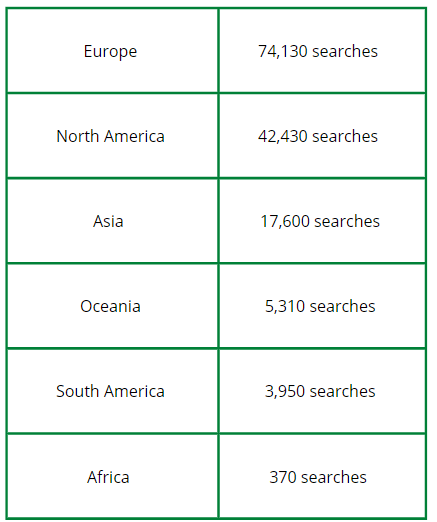
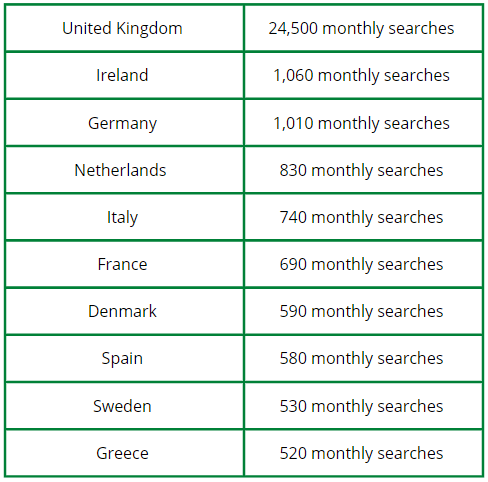
Apart from Europe being the number 1, ten of the top 20 countries worldwide are in Europe. The UK, Ireland, Germany, the Netherlands, Italy, and France are in the Top 5.    

Top Ten European Countries for Sustainable Shopping 
In Europe, environmental concerns and commitment to more sustainable lifestyles are more widespread among consumers, retailers, businesses, government, and non-governmental organizations. As a result, Europe is one of the most exciting markets in the world for sustainable apparel. In most EU countries, consumers, as mentioned above, are interested in sustainable fashion brands and expect companies to be responsible for social and environmental issues. The most trending topics around sustainable apparel include consumer education, fashion sharing, vegan clothing, transparency, standardization, and natural dyes.  

Germany is one of the markets with immense potential for sustainable US brands. This market is not only more conscious of sustainable products, but also 90% of the clothes Germans buy are from non-EU countries, and the US is a significant trade partner. In terms of sustainable fashion, spending on fair-trade textiles increased by 66% (129 million euros) in 2017 over 2016.   

Which measures has the EU taken to promote sustainable fashion?   

In recent years, the EU has imposed more policies on several industries to reduce its negative impact on the planet. Some measures the EU has taken include cutting back on the production and use of plastic products, increasing the production of electric cars, finding new ways to produce energy, and reducing the use of energy and water. Now is the time to develop new policies to promote sustainability within the fashion industry.  

Recently, the EU has unveiled a proposal to increase sustainability and reduce the consumption of fast-fashion products. This decision was made because clothing accounts for 81% of EU textile consumption, and fast-fashion products have built a culture of “take, make, break and throw away,” contributing to unsustainable practices and taking its toll on the environment. 

Under the new rules proposed by the European Union, products must be longer-lasting and easier to repair. Products sold in the EU would be developed on a sustainability scale, demonstrating their environmental impact, durability, and ease of repair. This initiative aims to boost the market for sustainable textiles and prevent companies from misleading consumers with false environmental claims or greenwashing. 

Under this strategy, manufacturers must ensure their clothes are environmentally friendly and hard-wearing. To contribute to this initiative, consumers will also receive more helpful information on how to reuse, repair, and recycle their clothes.   

Government support for continued growing demand and increased growth give US sustainable fashion brands a higher chance of entering the EU and having a fair chance of success within this industry. This is a good time for US sustainable brands to become part of this growing sector, as it is new and still underdeveloped, so there is room for learning and improvements to penetrate the EU market. 

What best way to expand into Europe as a US sustainable fashion brand?   

There are 27 countries within the EU, and it can be complex to simultaneously serve many countries with diverse cultures and languages. Germany is, therefore, the best market for US sustainable fashion brands to enter the European market. As already mentioned, the market is already interested in environmentally friendly products and recycling and is one of the largest markets in the EU.   

Fashion is the number one category sold online in Germany. Therefore, the best way to enter the EU market and start selling is through the most popular German fashion marketplaces. Three of the best marketplaces in the fashion segment in Germany’s top 10 are Otto, Zalando and Aboutyou. 
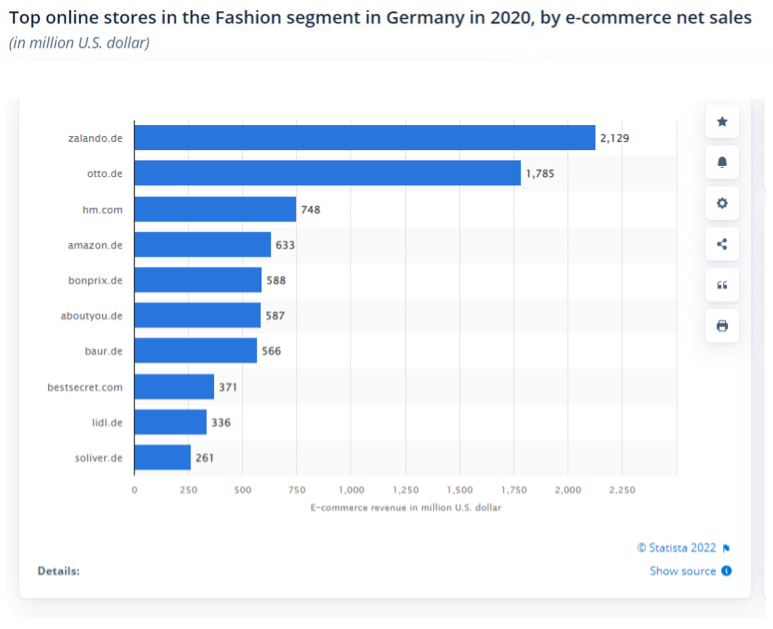
These fashion marketplaces are not only the best in this segment but also the best for sustainable fashion brands. They are interested and committed to contributing to sustainability and taking measures to be part of the solution in reducing the fashion industry’s impact on the planet. 

OTTO  

The Otto Group is Germany’s biggest fashion and lifestyle marketplace, with more than €11 billion in online sales and over 3,400 brands.   

Otto is committed to sustainability and has taken measures to reduce its impact on the planet. Some measures include searching for alternative packaging, such as 100% recyclable polybags, recycling bags, and recycled cardboard. There is also an initiative to encourage consumers to donate by offering free shipping from the consumer’s address to Hermes Parcel Shop and a voting system where consumers can choose their preferred charity institution.   

They also have a code of ethics that brands should follow, which goes along with EU regulations to encourage brands and consumers to improve sustainability. For example, sustainable raw materials like cotton and wood from certified forestry are used.  

About You 

Founded in 2014, it is Europe’s fastest-growing fashion e-tailer and part of the OTTO Group. It is considered a unicorn with more than US$1 billion. Since 2020, About You has expanded to 23 countries in the EU with over 2,000 brands, including exclusive collaboration collections with designers.

 AboutYou strongly supports sustainability, and some actions it has taken are: 

  • The use of eco-friendly boxes and poly mailers 80% recycling material and fewer prints.   
  • Increase transparency through new shop features, which label sustainable products and show all criteria and certificates 
  • Increase the number of sustainable brands and products in their portfolio 
  • Strengthen their sustainability criteria for used materials, processing methods and working conditions
  • Integration & launch of the product category “Second Love” for quality checked second-hand items in the About You Shop that can be purchased with their known customer benefits, such as free shipping and returns  
  • Continuation of the ABOUT YOU Vintage Wardrobe – A space where festival and event visitors can rent second-hand clothing for free and learn more about used garments and the concept of circularity 

Zalando 

Established in 2008, Zalando is the most prominent fashion e-commerce marketplace in Europe. It’s available in 23 countries and sells over 4,500 different brands, with net sales of €8 billion. Zalando is a unique marketplace with a betting process, providing exclusivity and visibility to its brands. 

Zalando has been taking several measures to be part of the solution towards sustainability in terms of the planet, product and people; some of these are:  

  • Source 100% renewable electricity and reduced emissions from our operations 
  • Eliminate by 2023 single-used plastic 
  • Launched the sustainable flag in their Fashion Store to help customers find more sustainable items and tripled their more sustainable fashion assortment 
  • Their private label Zign has been fully dedicated to sustainability since the summer of 2020. 
  • They launched their first Circularity strategy in 2021. 
  • Make it easier for customers to reuse and resell their clothes. 

How can US sustainable fashion brands be part of these Marketplaces?  

Our Marketplace Partners solution allows US fashion businesses to be part of these exclusive marketplaces. We provide brands with tools to expand into these marketplaces efficiently, allowing them to succeed. Our solution provides businesses with localized services, such as tax and legal compliance, customer service, warehousing, logistics, and more. BorderGuru eliminates all complexities that come with international growth.    

Don’t wait anymore. Contact us now and learn how your brand can succeed in the European Market!